Custom Game Mats and Game Screens
Game mats and game screens are not just visual accessories. Mats define the surface players touch, move cards across, and roll components on. Screens protect hidden information, separate player areas, and need to stand properly after repeated folding and setup.
At Funway, we manufacture custom game mats and screens as functional tabletop components, not just printed decorations. For mats, we check surface texture, edge durability, rubber stability, odor control, and flatness. For screens, we check board thickness, fold structure, opacity, panel alignment, and long-term crease durability.
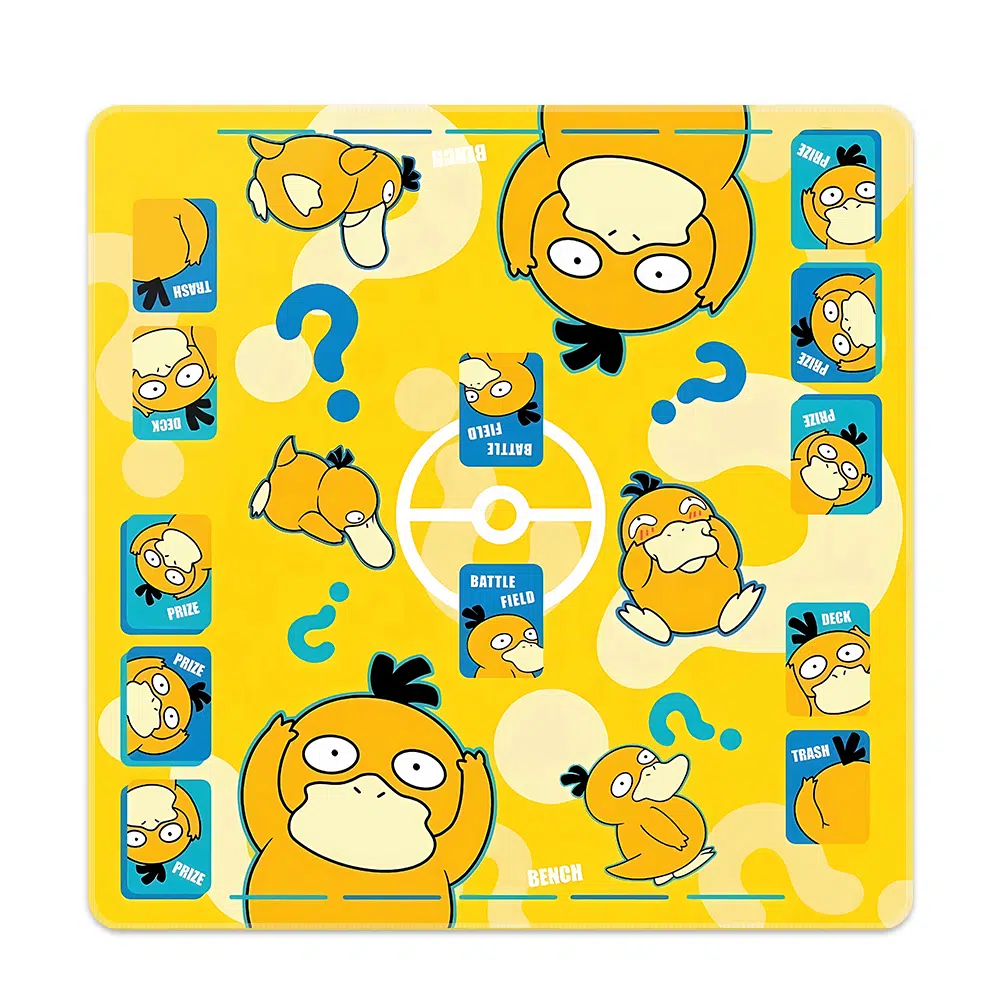
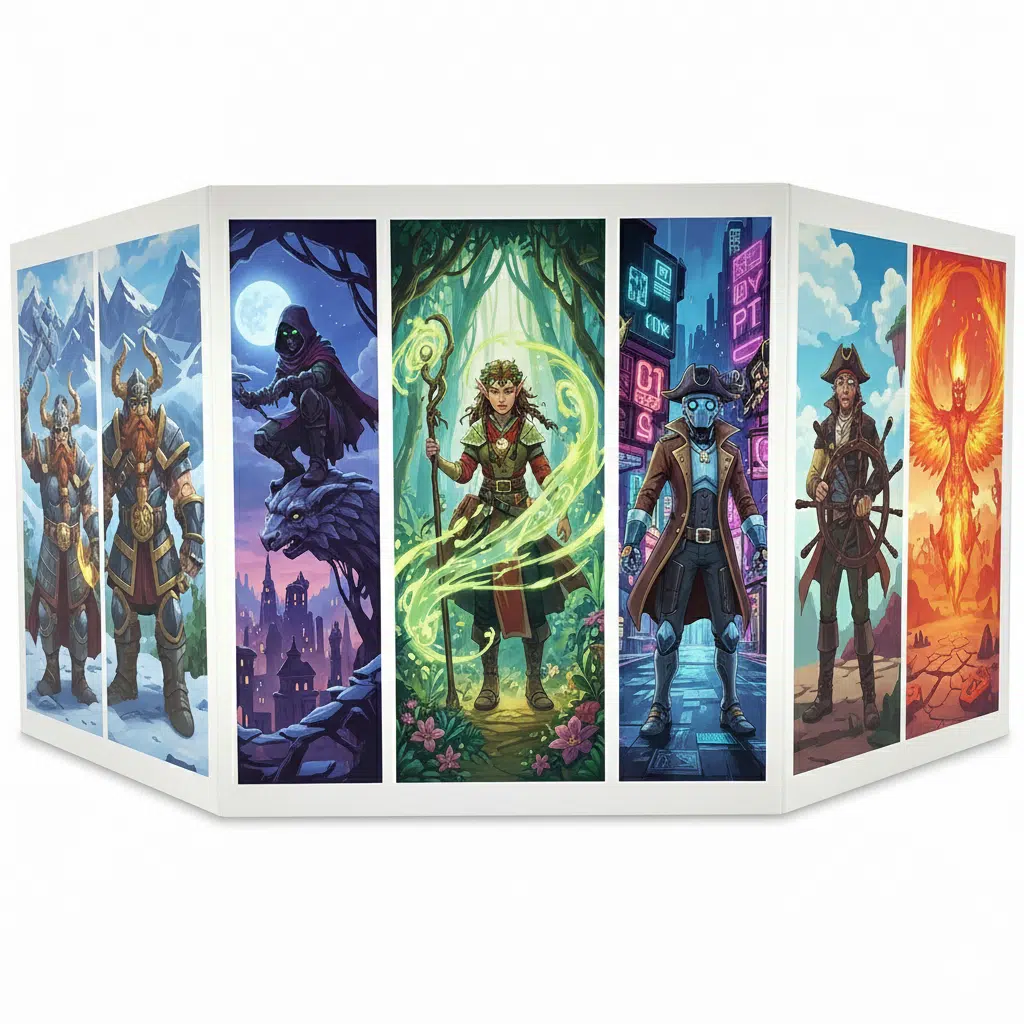
We Provide All options for Game Mats & Screen
Professional Neoprene & Fabric Game Mats
A game mat is judged by how it behaves on the table. Cards should slide without catching. Dice should not bounce wildly. The mat should lie flat, grip the table, and roll back out without strong rubber odor or curled edges.
Material Engineering & Odor Control
Game mats typically use fabric laminated to neoprene. The fabric affects card slide and print clarity, while the rubber base controls grip and stability.
Neoprene must be aired before packing. If packed too early, rubber odor can be trapped inside the rolled mat.
Surface Friction Control
The surface must balance friction. Too rough, cards snag; too smooth, components slide.
Fabric is chosen based on use: card play, dice rolling, component placement, or table protection.
Edge Durability & Anti-Fraying Construction
Edges wear first. Once fraying or separation starts, the mat degrades quickly.
Stitched edges should be planned early for large or frequently rolled mats. They add cost but improve durability and prevent edge curling.
Anti-Slip Base Stability
The backing affects stability. Poor grip causes the mat to shift during play.
Grip is checked with size and thickness. Small mats may work with lighter backing, but large mats need stronger grip to stay stable.

Folding Game Screens for Hidden-Information Play
A game screen has to stand, fold, and hide information. If it bows, tips over, cracks at the fold, or lets strong light show through, it stops working as a screen and becomes a problem on the table.
Board Rigidity & Warp Control
Screens need enough thickness to stand without bending. Too thin feels weak; too thick adds stiffness and bulk.
Large panels require balanced mounting on both sides to prevent bowing over time.
Fold Line Durability
Fold lines take the most stress and must bend cleanly without cracking or weakening.
Fold structure is checked early, especially for 3- and 4-panel screens, to avoid failure after repeated use.
Opacity & Hidden Information
A game screen must block hidden information under normal table lighting, not just look opaque in print.If the board is too thin, the wrap too light, or the inner color too weak, shadows and shapes may still show through.
When privacy matters, panels are checked under both normal lighting and strong backlight before finalizing thickness, print coverage, and inner color. The goal is to ensure players cannot read through the screen during play.
Layout & Panel Options
Screen layouts usually start with 3 or 4 panels. More panels are not always better.The screen must hide the player area, stand stable, and fold back into the box without interfering with the insert.
Panel size, fold direction, orientation, and edge shape are checked together before production. Too many panels can make the screen unstable, while a screen that is too small may expose information around the sides or over the top.
Transparent Pricing
Custom Game Mats & Game Screens Pricing Examples
See real-world pricing examples for popular board game styles. Every project is unique. these estimates help you plan your budget before requesting a detailed quote.

Standard Neoprene Playmat
Durable soft-touch playmat for a smooth gaming surface
Estimated Quote (1,000 units)
$2.5 – 5.5 / set
Lead time: 15-60 days
Component | Specification | Qty |
|---|---|---|
Game Mat | 60 × 35cm × 2mm | 1 pc |
Material | Neoprene Rubber | / |
Printing Type | Full-color Print | / |
Crafts | Stitched Edges | / |
Surface Texture | Smooth Surface | / |

Large Board Game Playmat
Extra-large premium playmat for expansive board setups
Estimated Quote (1,000 units)
$6 – 12 / set
Lead time: 15-60 days
Component | Specification | Qty |
|---|---|---|
Game Mat | 90 × 60cm × 3mm | 1 pc |
Material | Rubber Base (Durable) | / |
Printing Type | Full-color Print | / |
Crafts | Anti-slip Backing | / |
Understand Your Costs
Deep-dive guides to help you budget, plan, and avoid surprises.
Individual Component Pricing
Need a quote for just one component? Check individual pricing for each sub-service.
Ready to Get Your Exact Quote?
These are estimates. Your game is unique. Send us your specs and we’ll return a detailed, itemized quote within 24 hours.
Complete Custom Board Game Components
A board game is a system of interconnected components. At FUNWAY, we manufacture every element — from the board and box down to the smallest token — as one integrated production, not separate parts. Here are all the customizable components that go into a complete board game. And of course, you can choose to customize the whole or just a part of it.
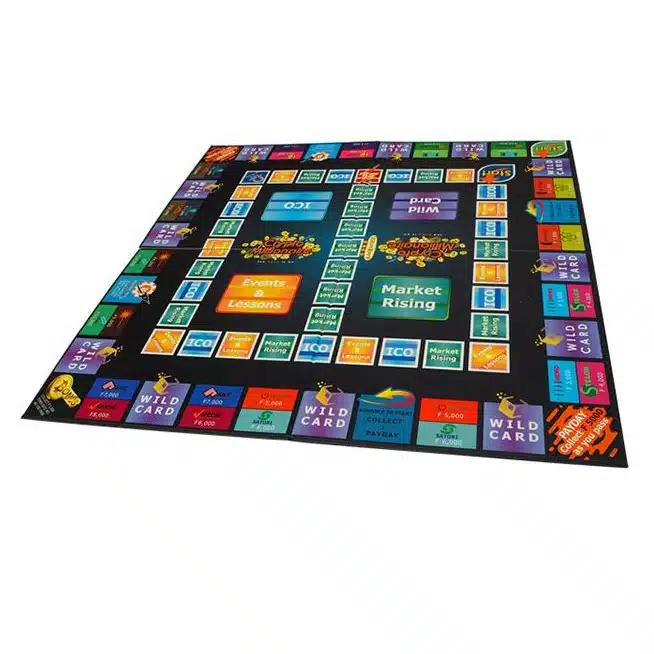
| Folded or rigid boards up to 600×900mm with hinge alignment and surface finishing | |

| Telescope, rigid, and magnetic boxes engineered for fit and stacking strength | |
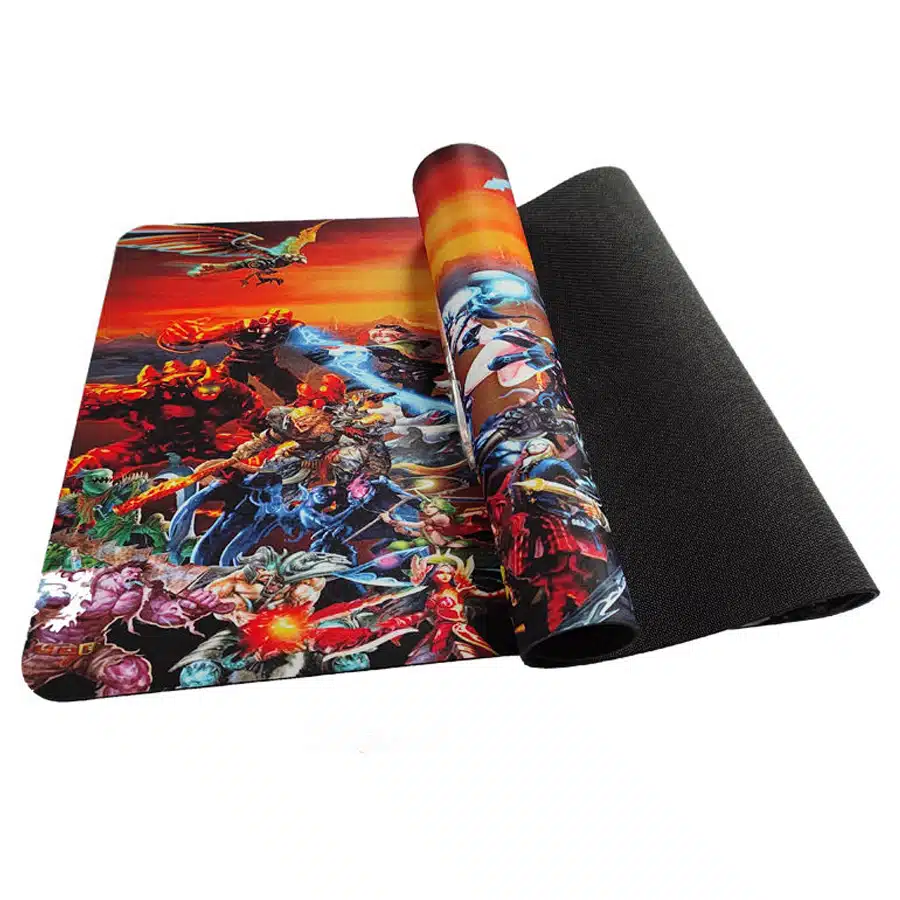
| Neoprene play surfaces and foldable player screens | |
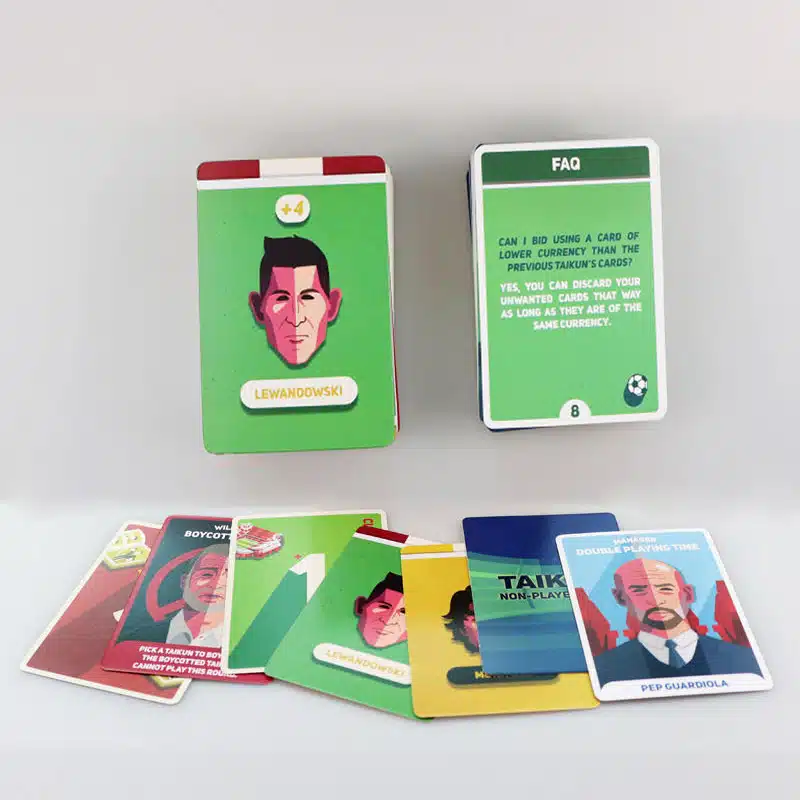
| Cardstock selection, clean cutting, and coatings for stable shuffling | |
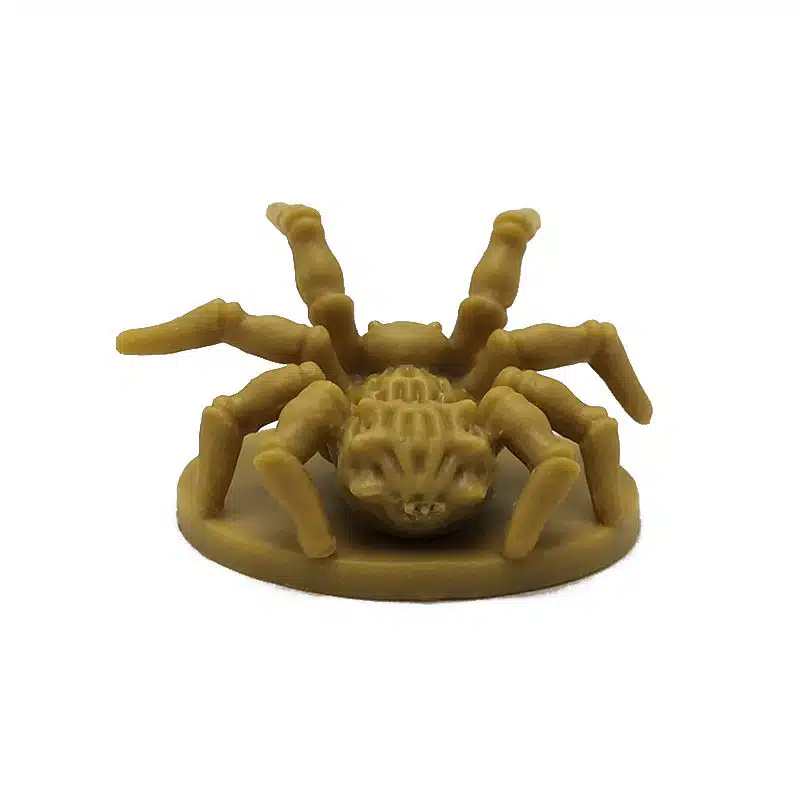
| PVC and resin figures with mold review and scale consistency control | |
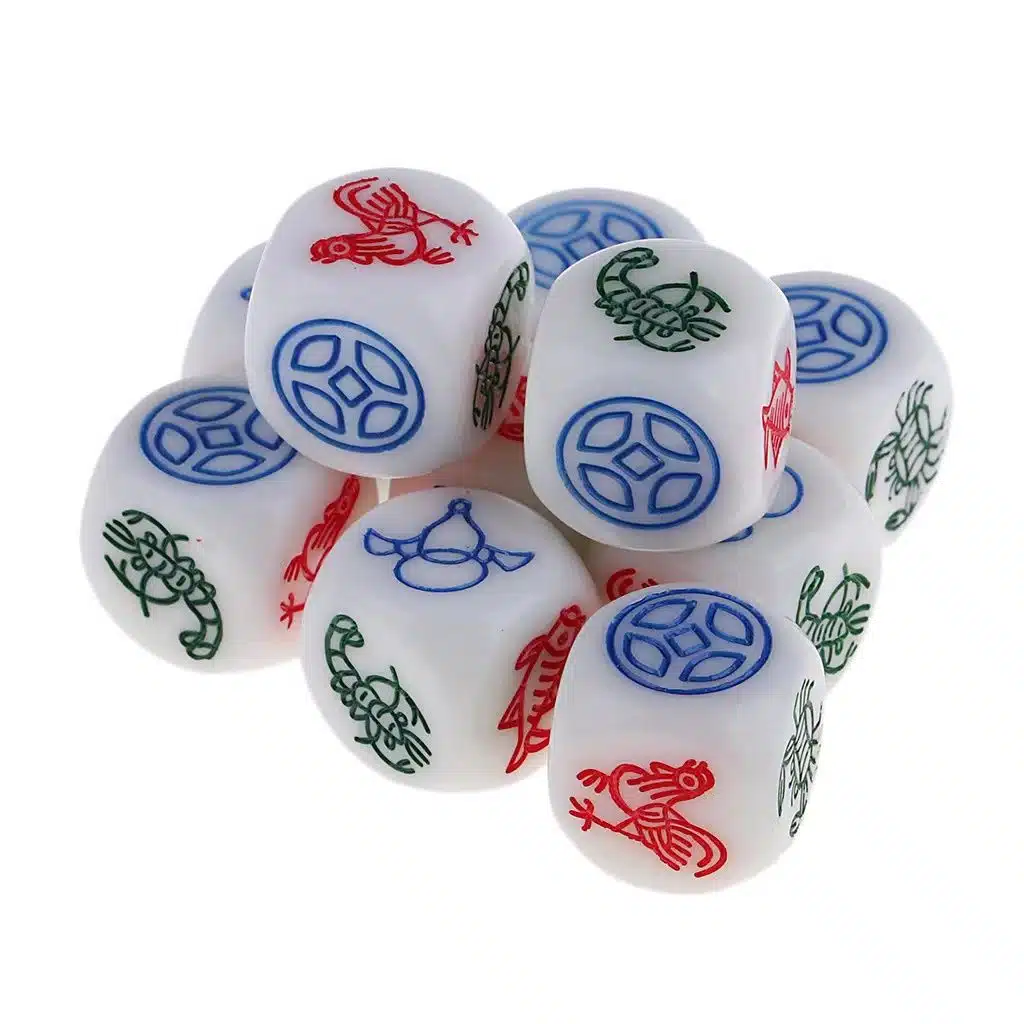
| Precision dice in multiple materials, sizes, and custom face designs | |
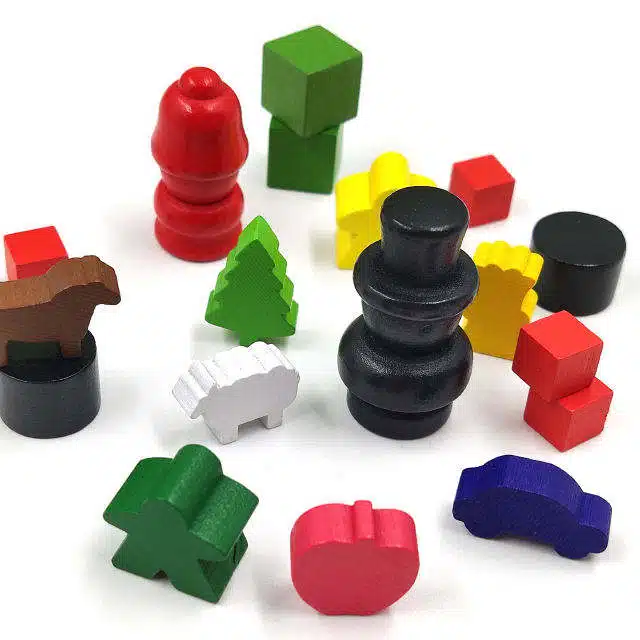
| Player markers in wood or plastic with precise silhouettes and color control | |
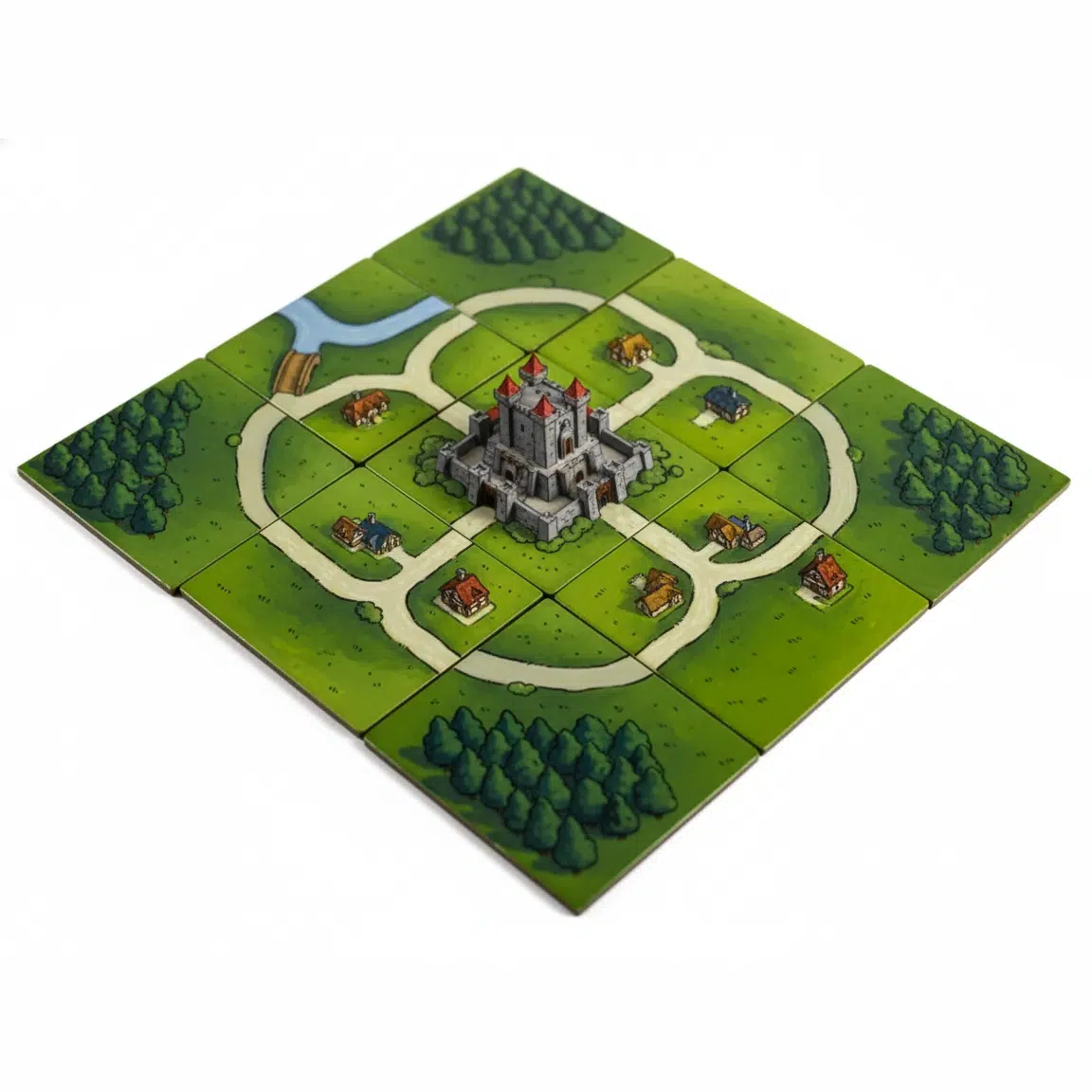
| Map and terrain modules in cardboard, plastic, or acrylic | |
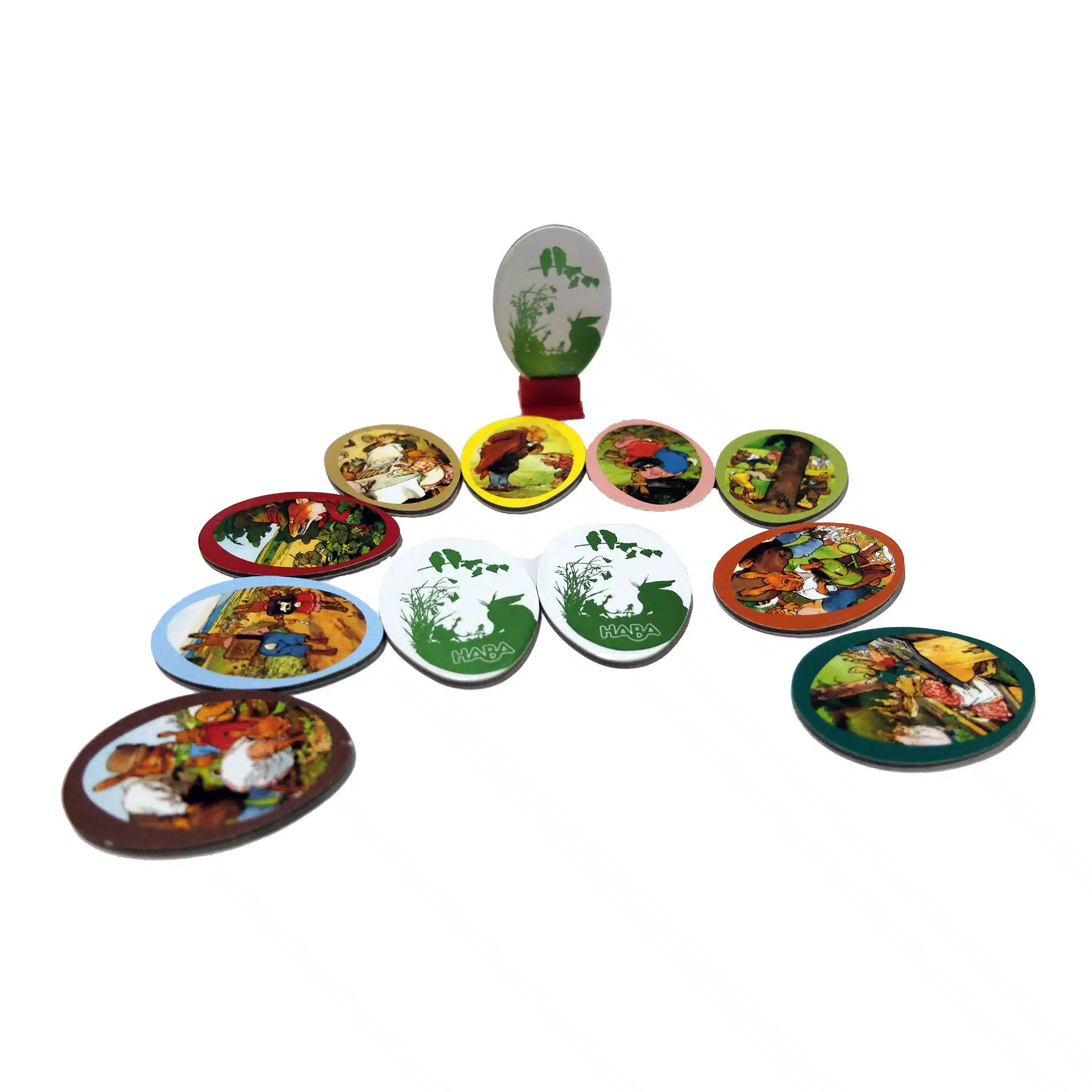
| Punchboard chips, wooden discs, and counters for scores and resources | |
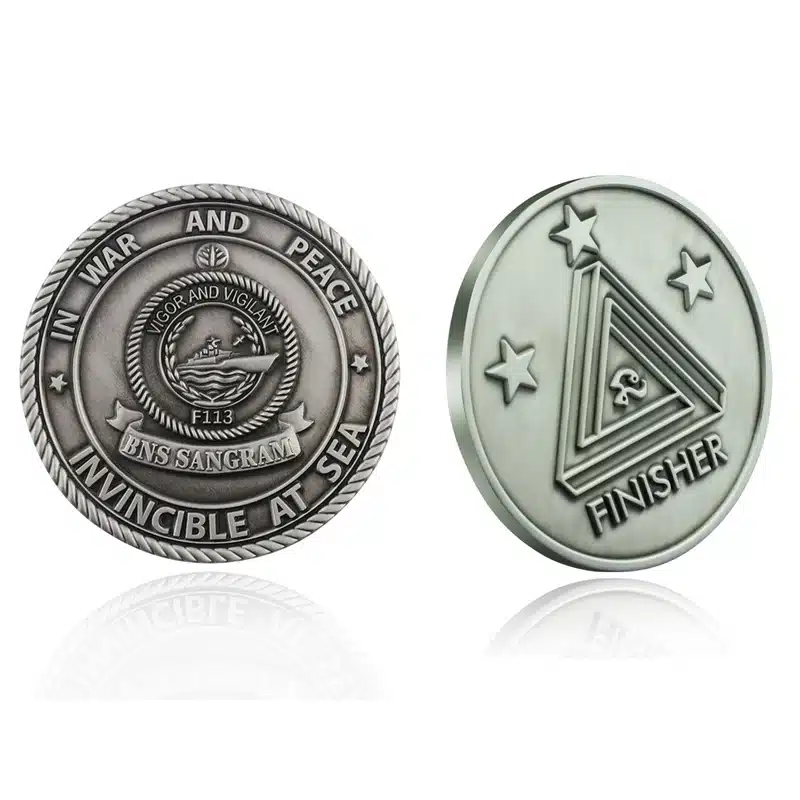
| Metal coins, wooden resources, plastic pawns, standees, and specialty parts | |

| Printed paper essentials for rules, currency, and scorekeeping | |

| Printed game currency with denomination and sorting control | |
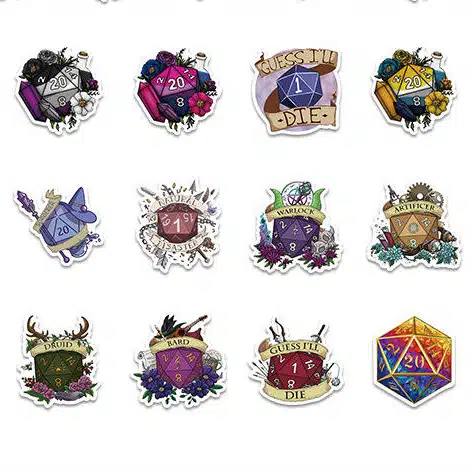
| Kiss-cut sticker sheets and labels for game states and branding |
Every component above is manufactured through our integrated production system — from component mapping and engineering review through sampling and mass production. Learn more about our complete custom board game printing services.
Why Choose FUNWAY
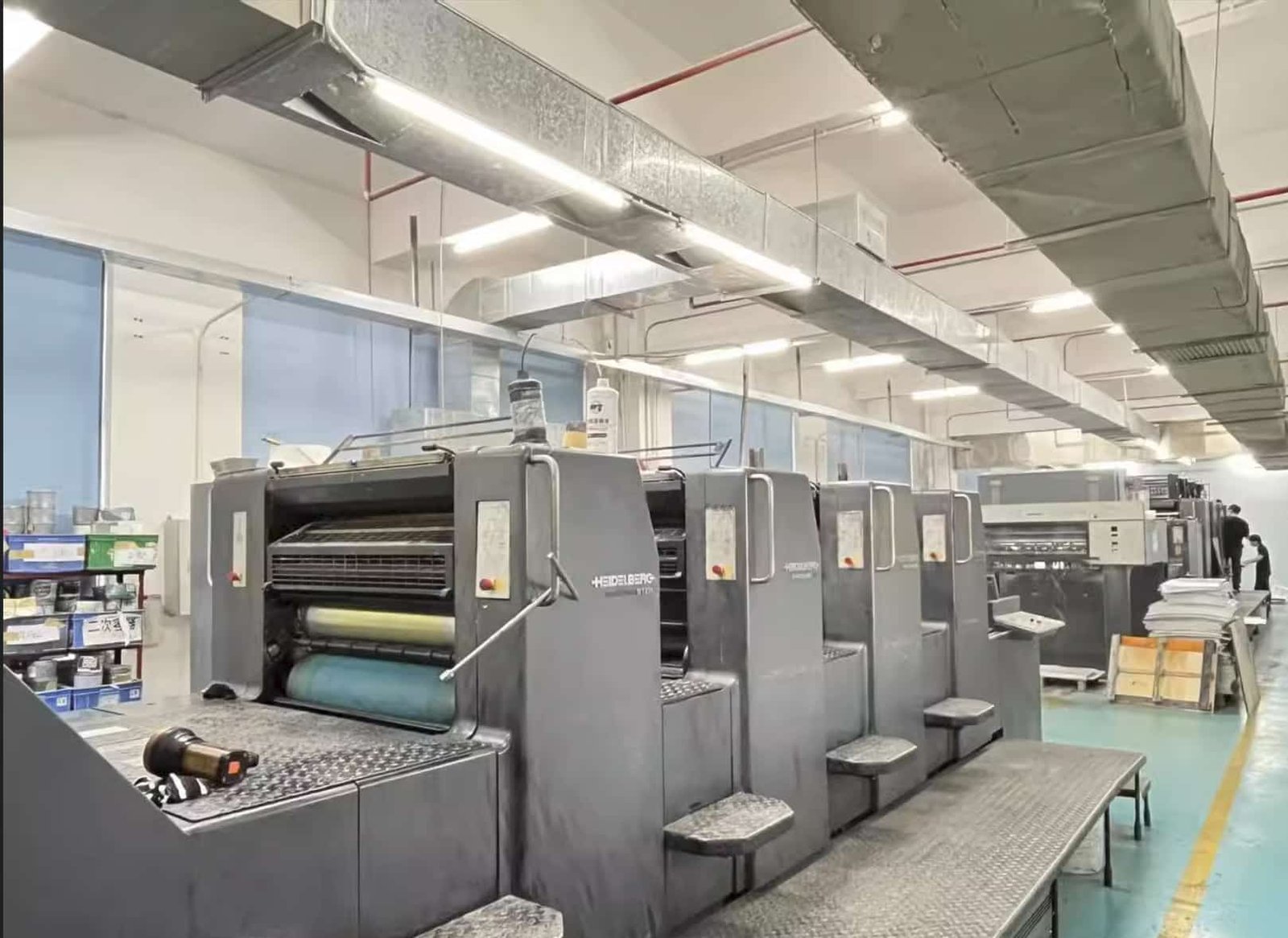
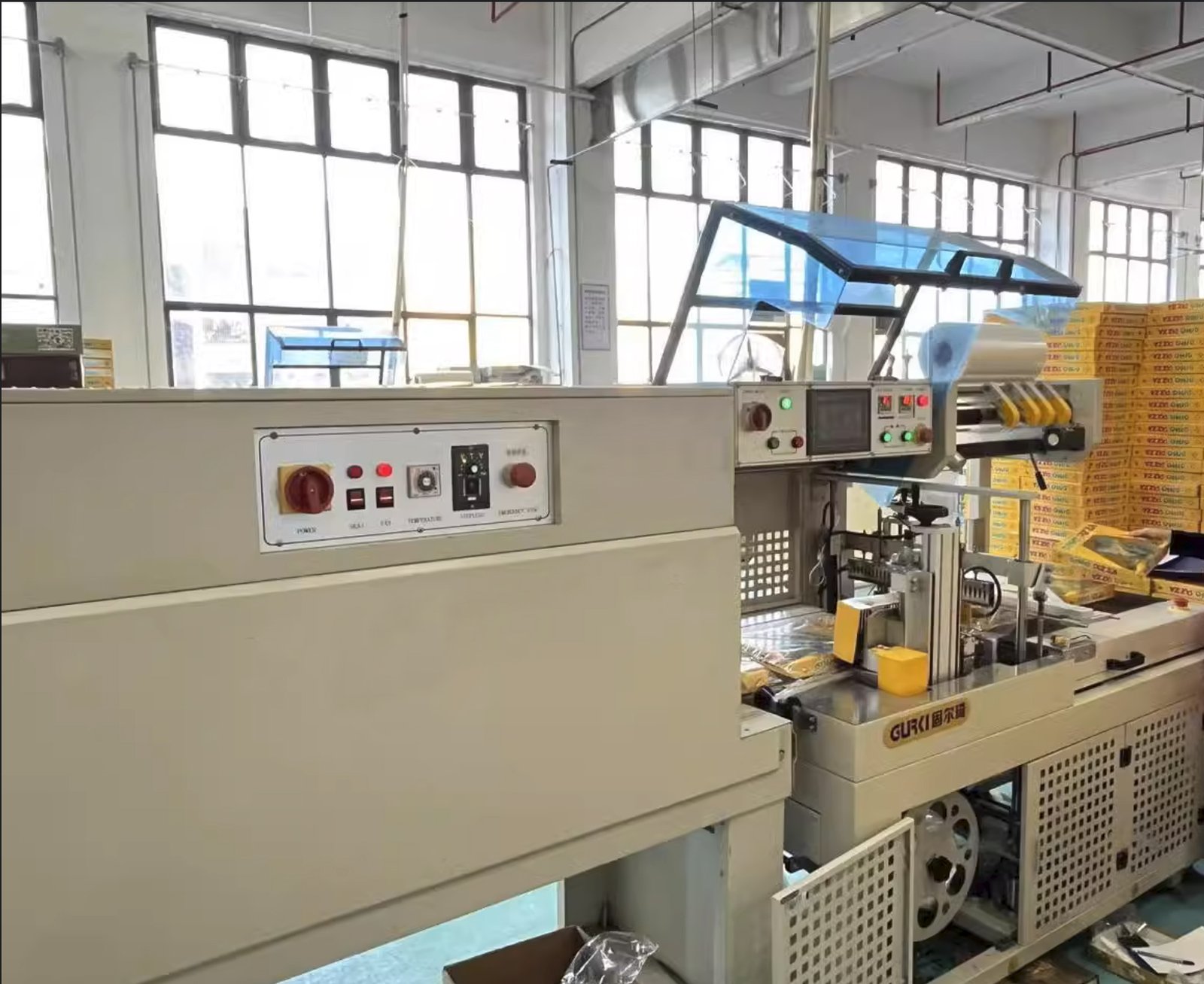
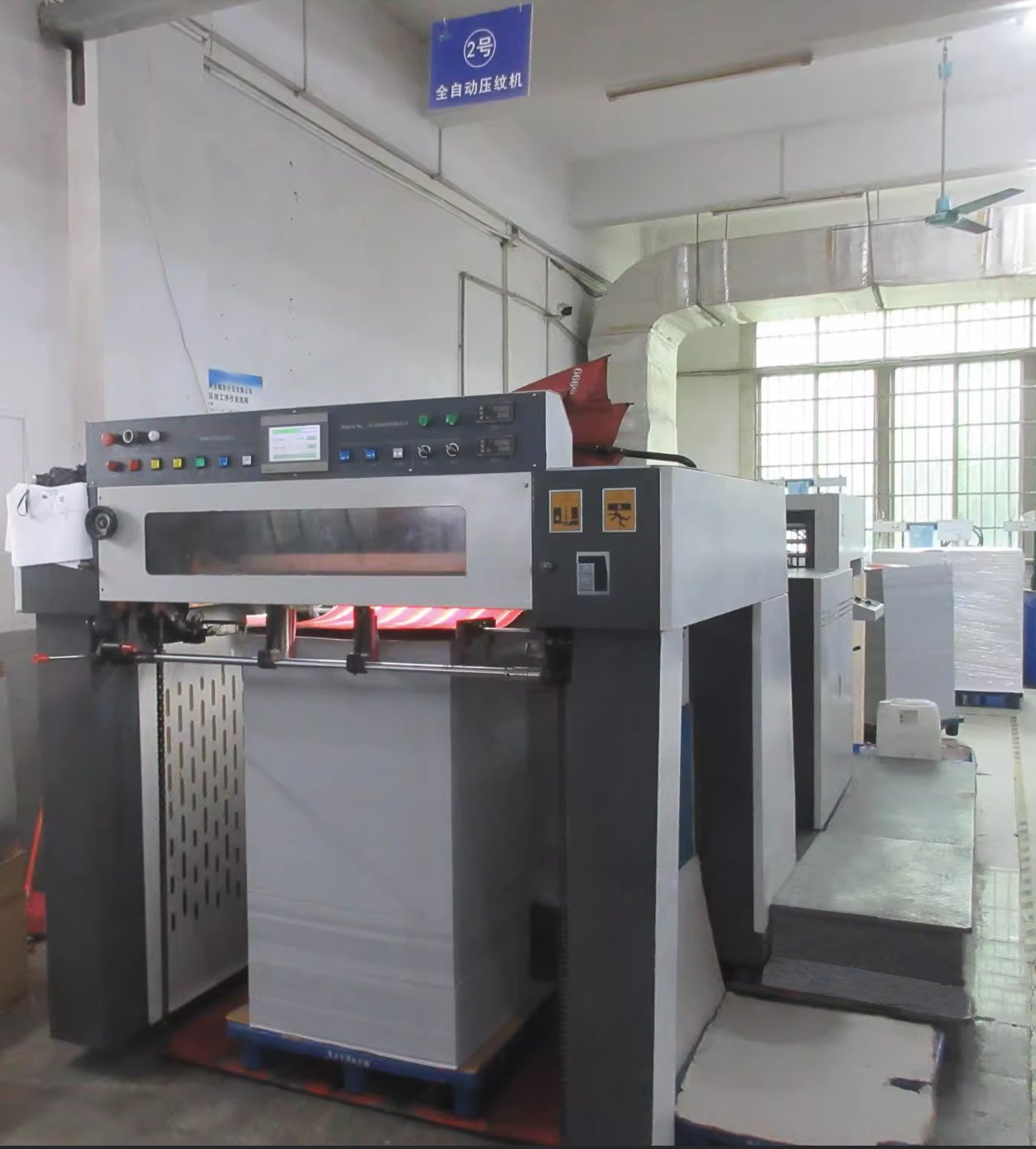
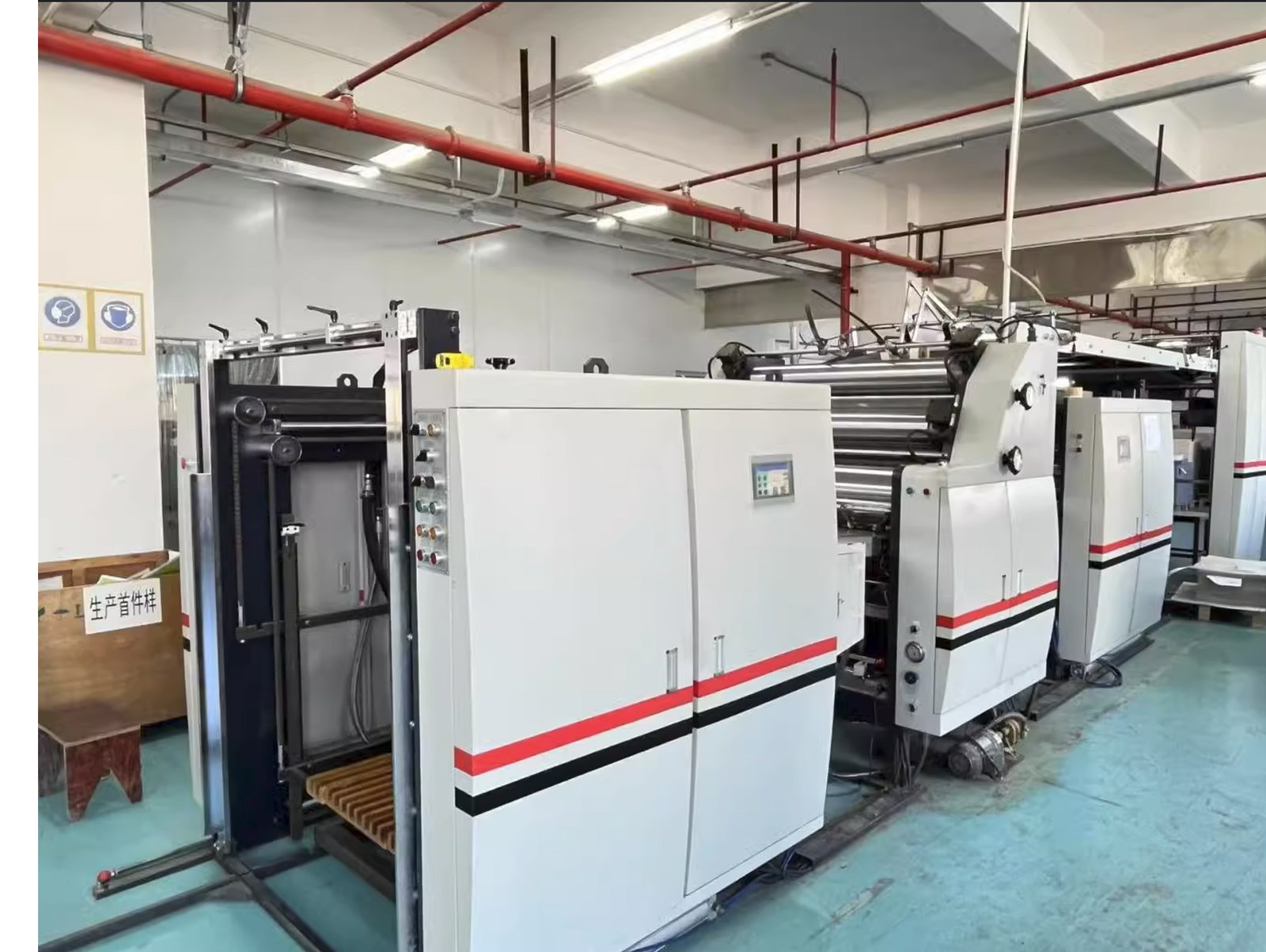
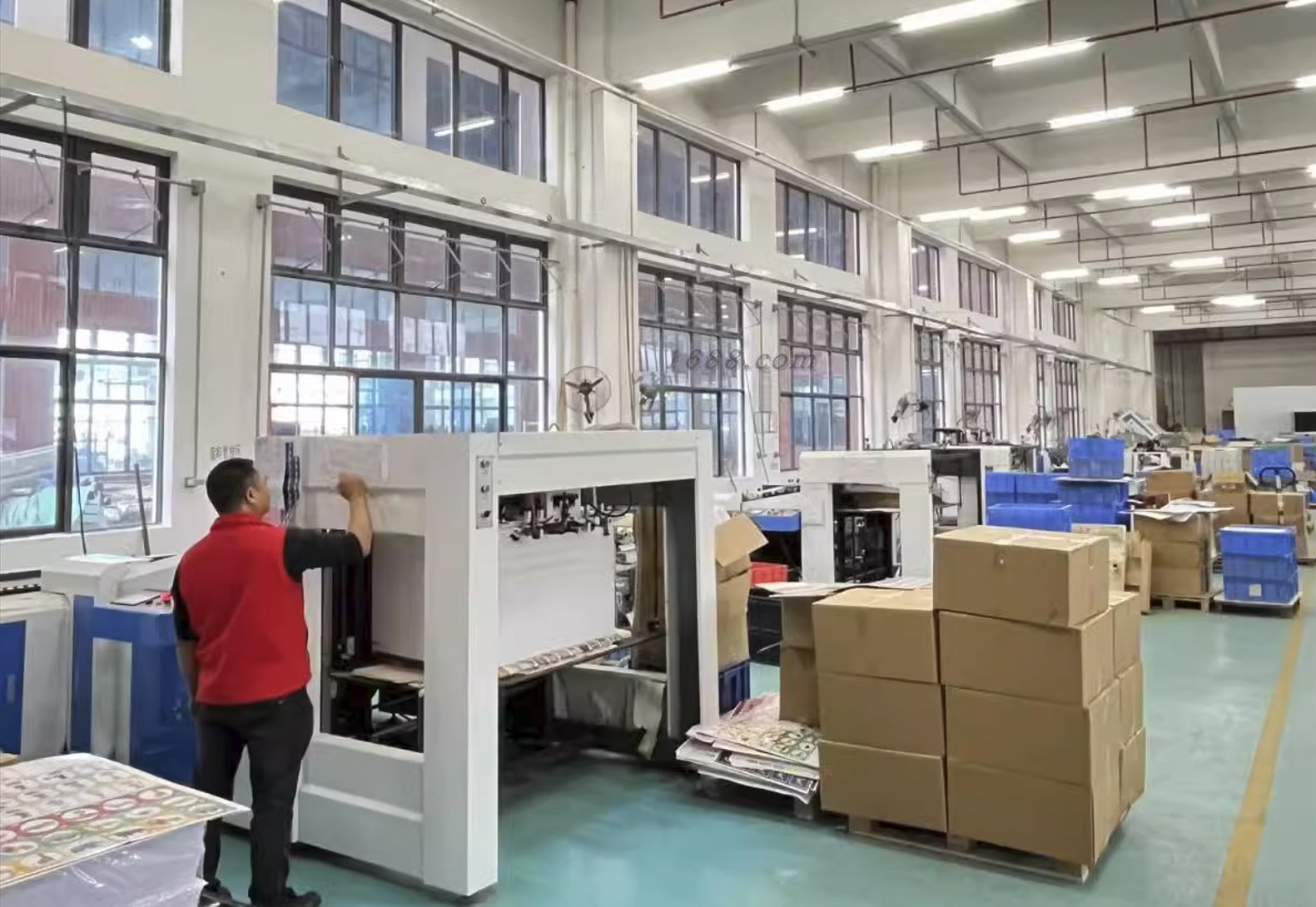
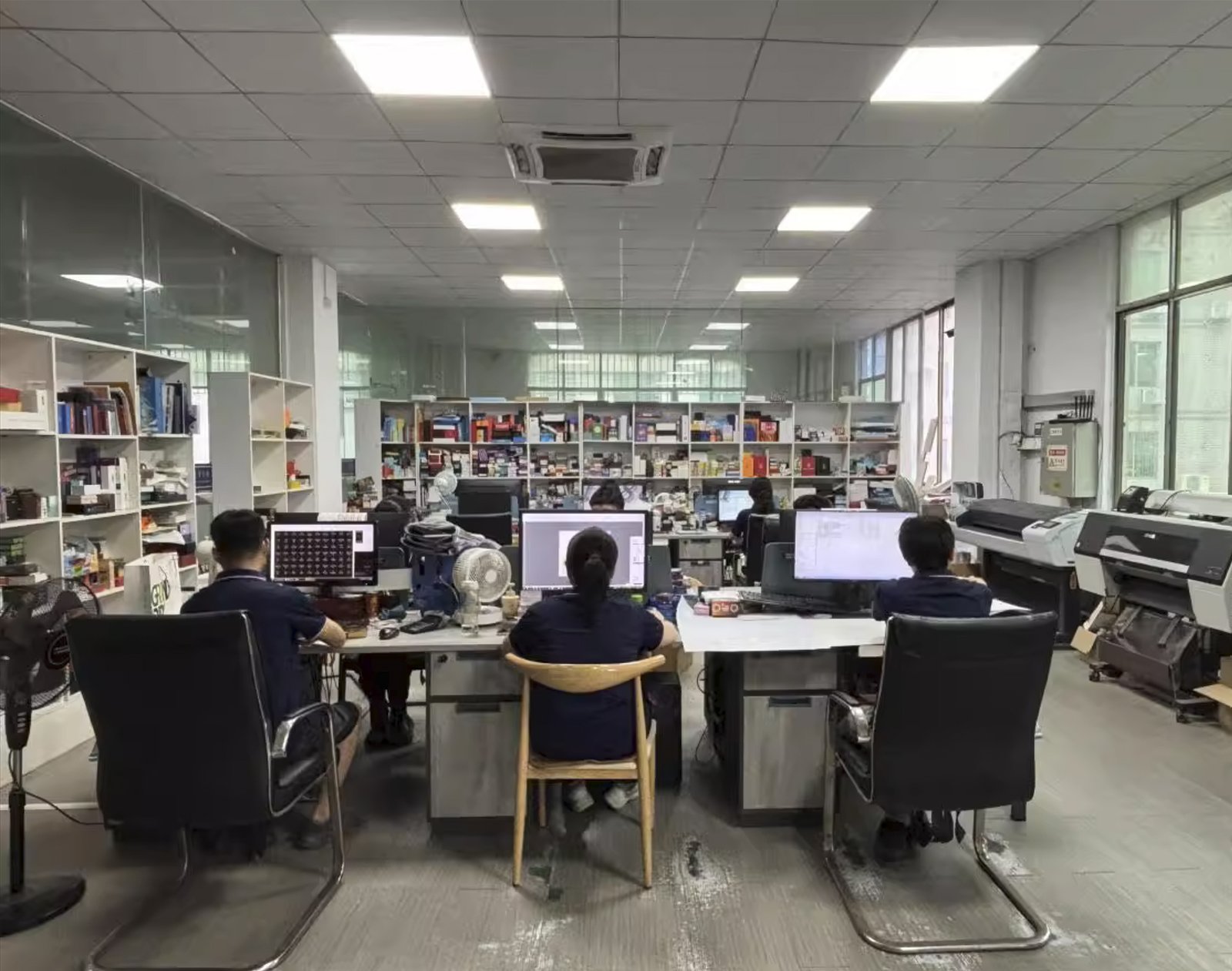
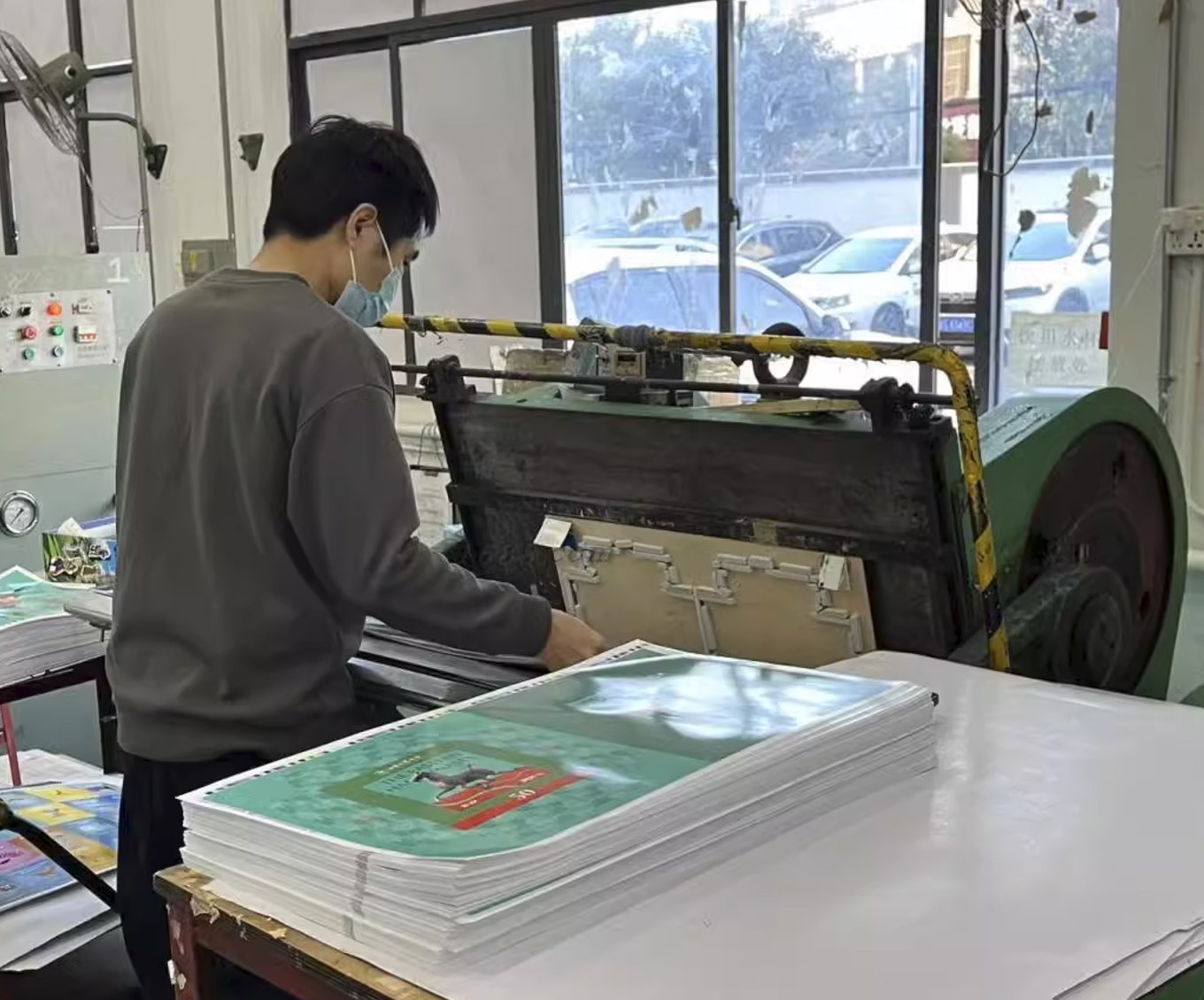
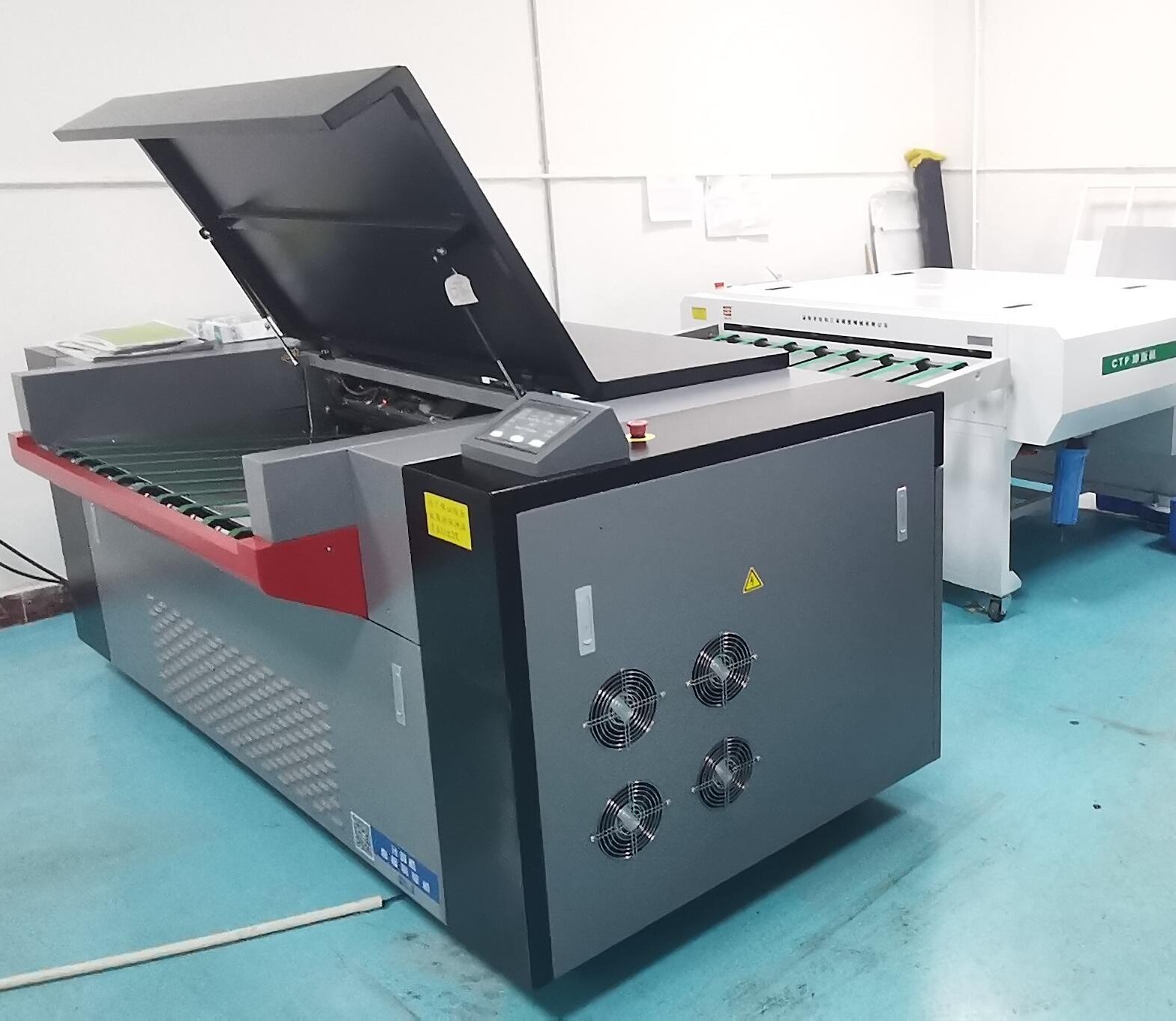
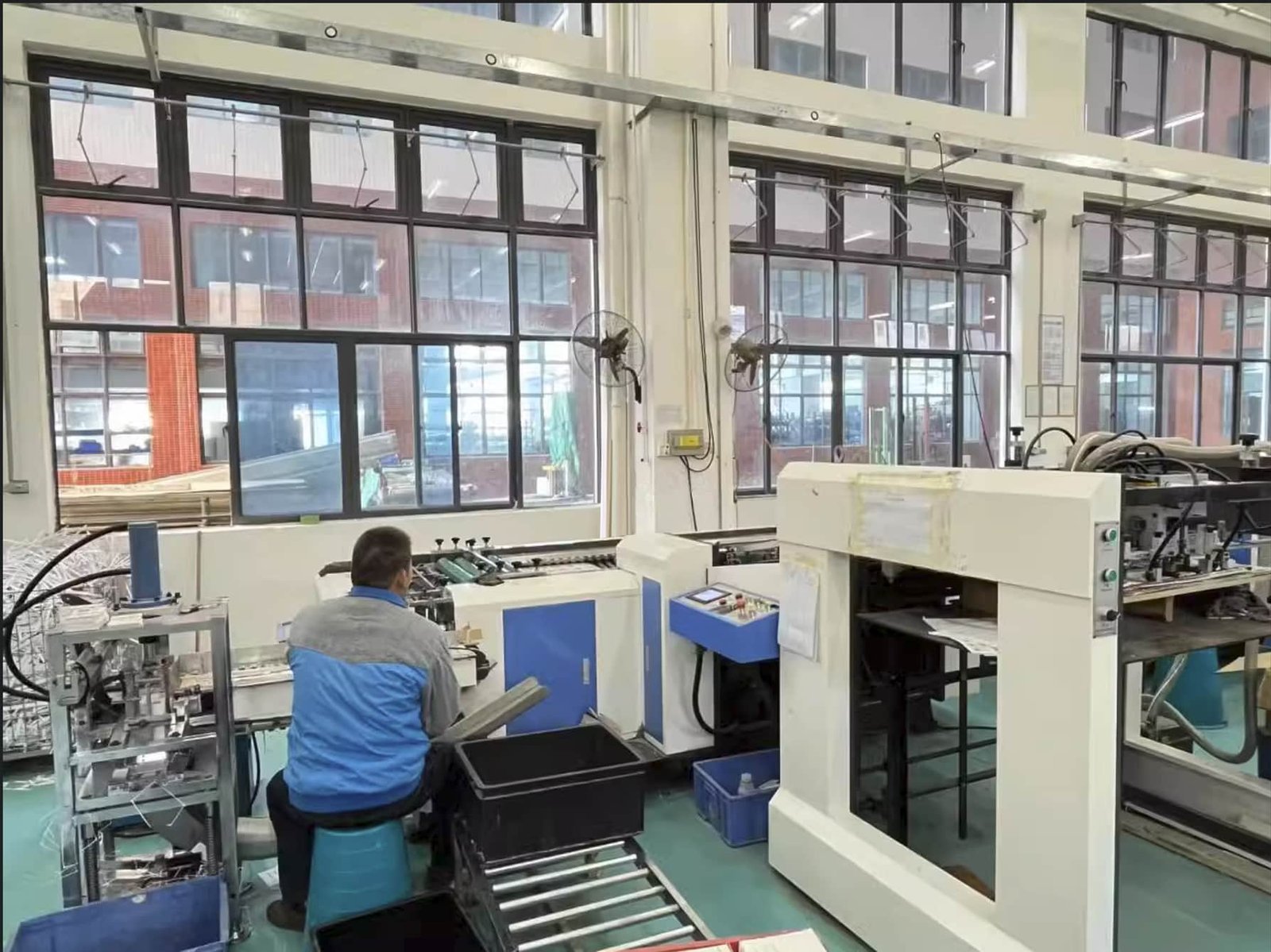
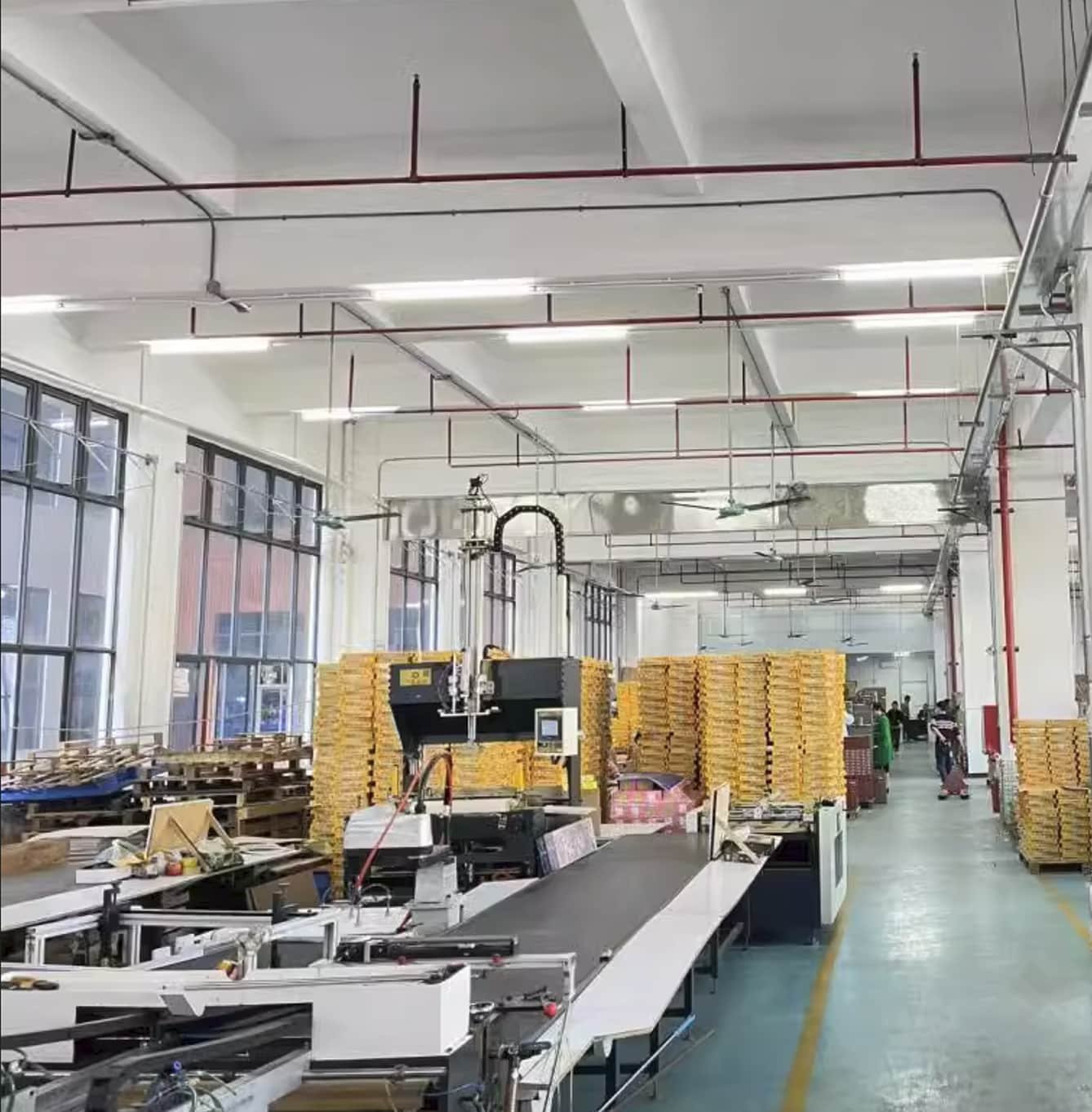
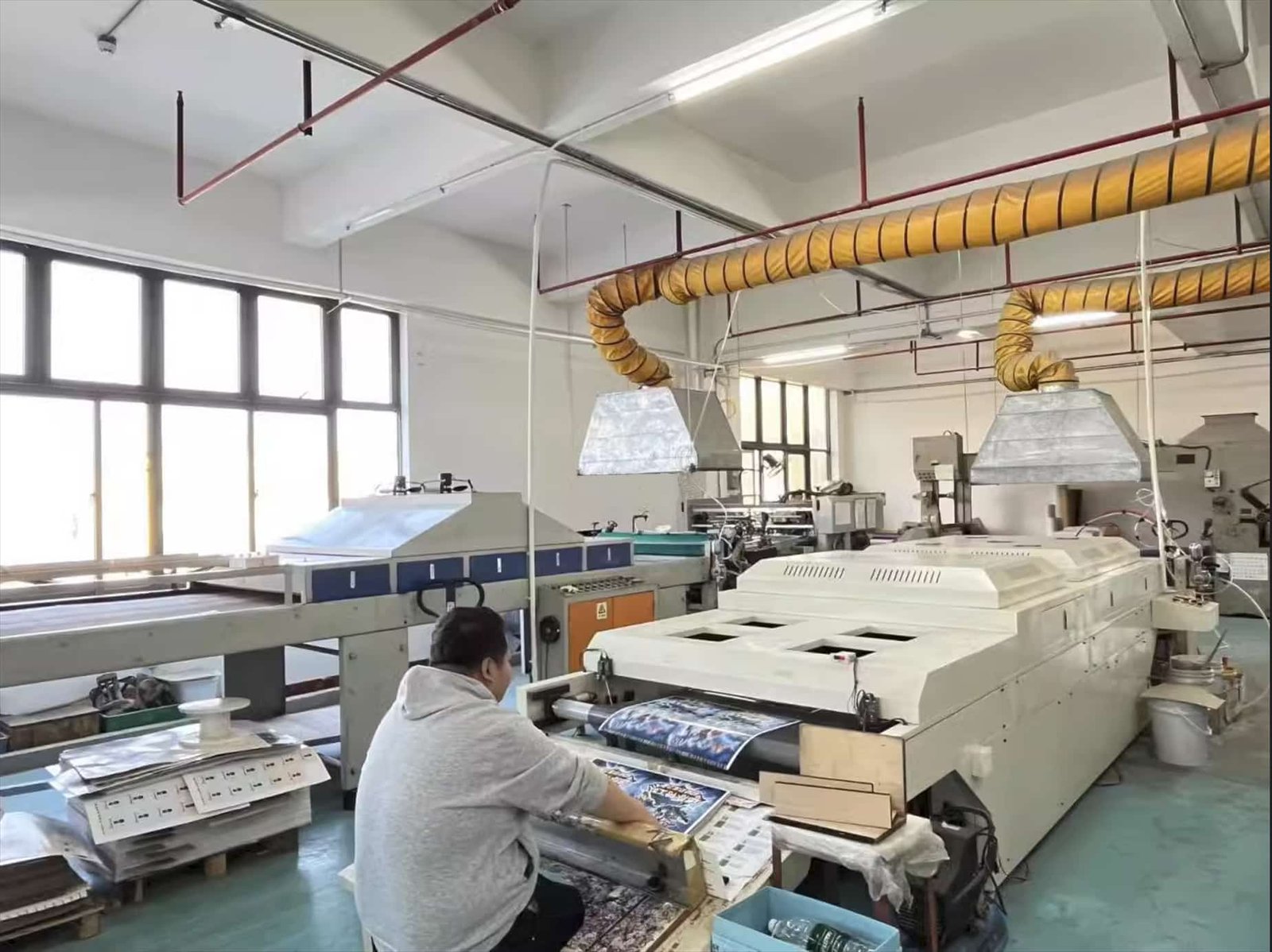
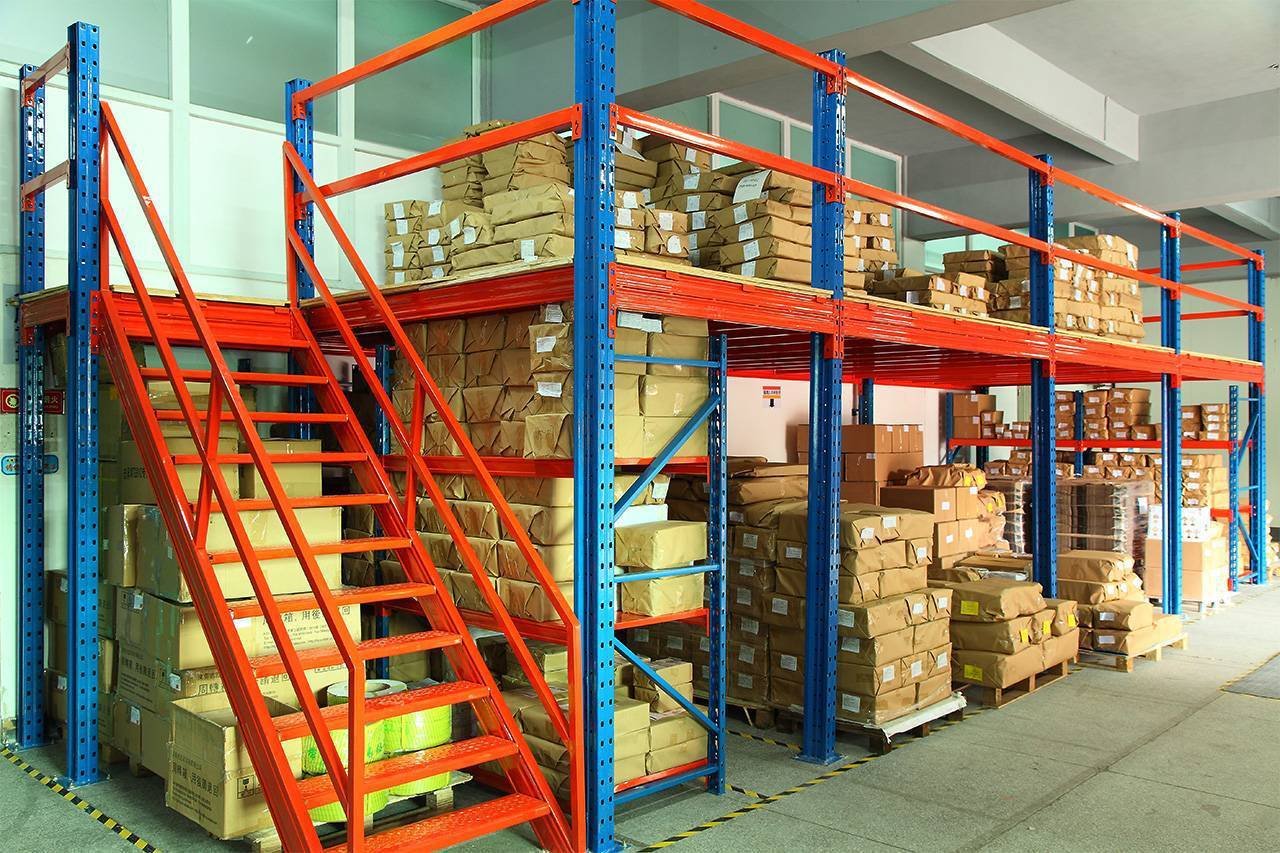
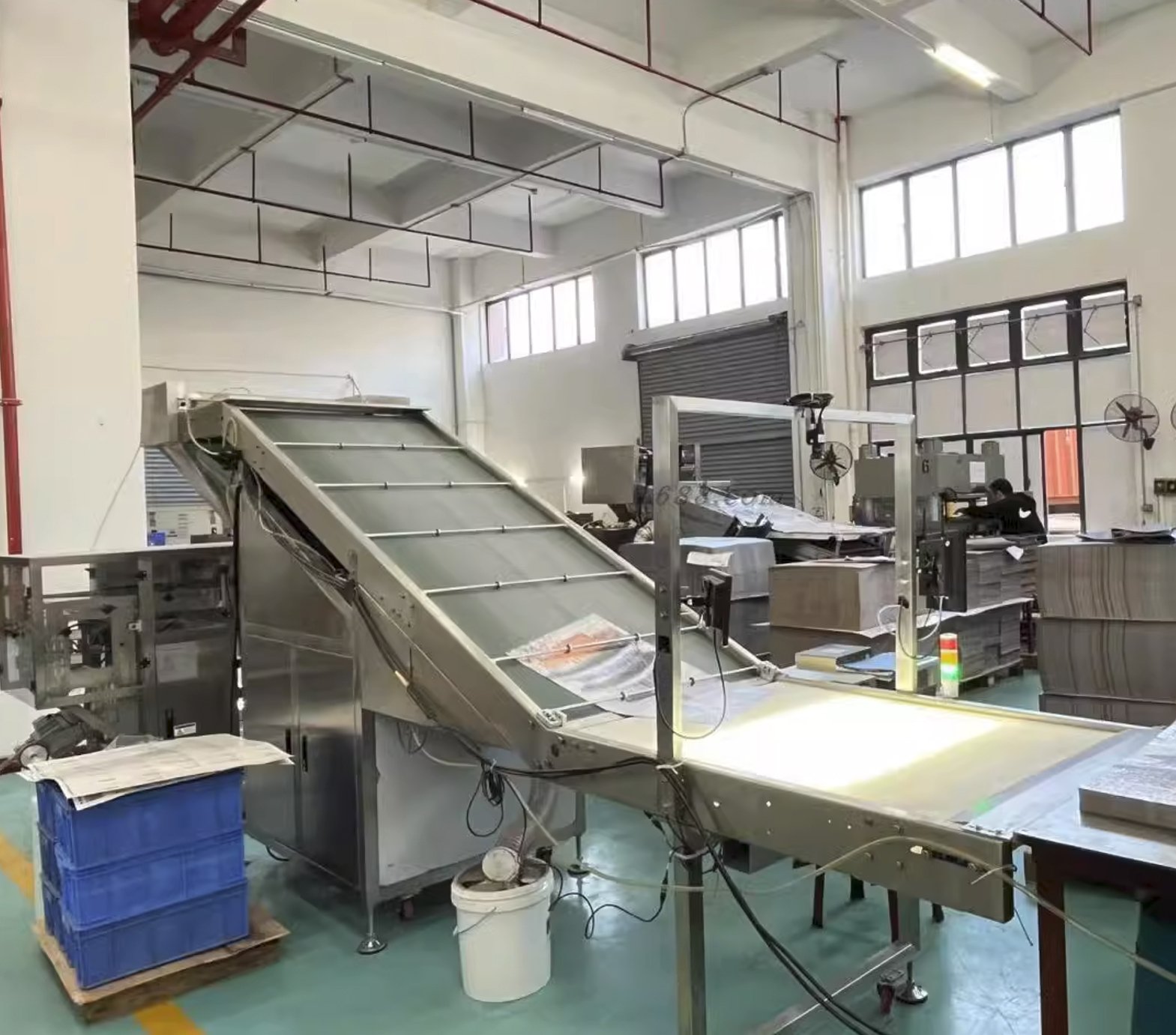
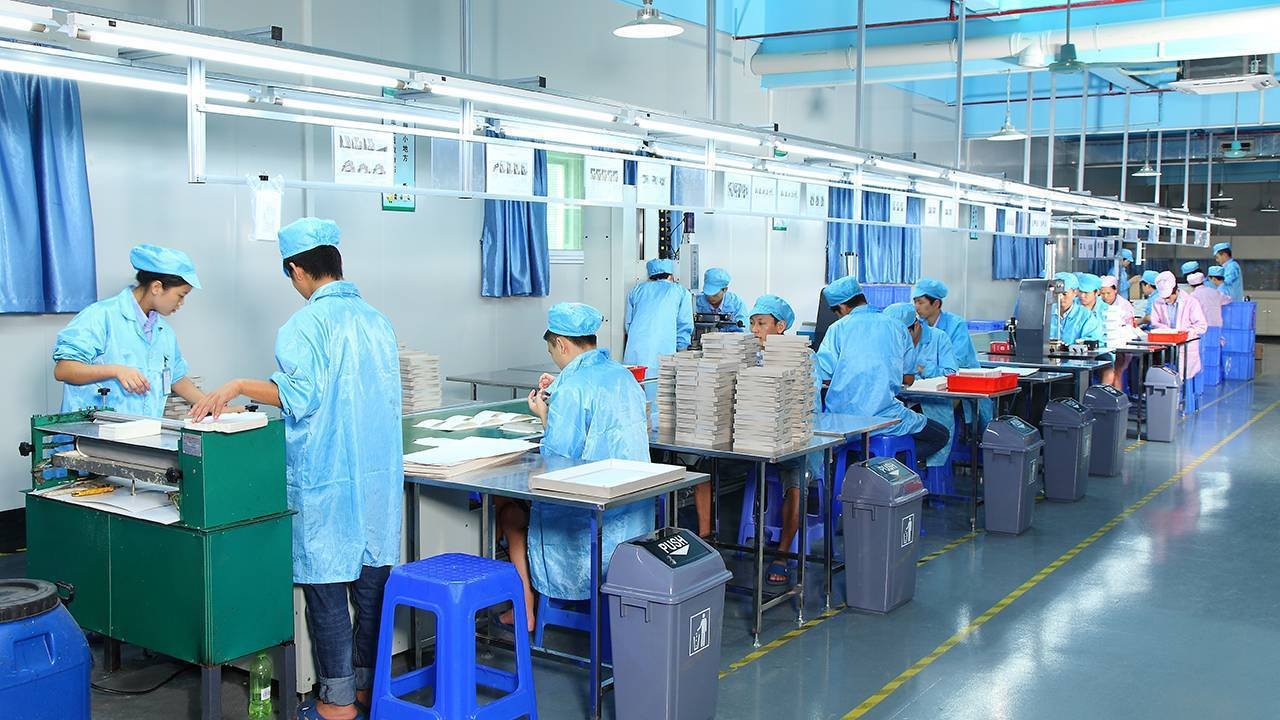
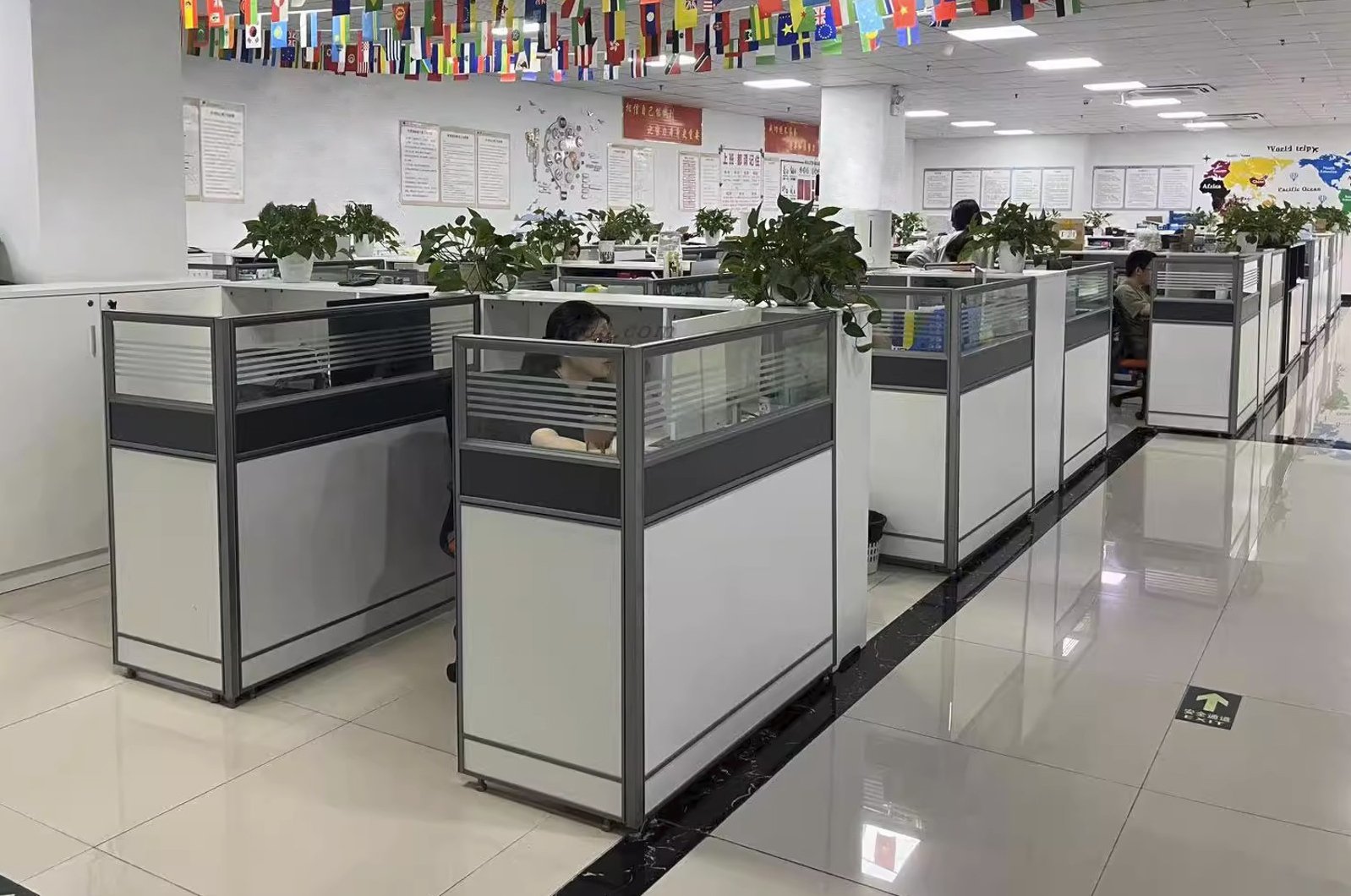
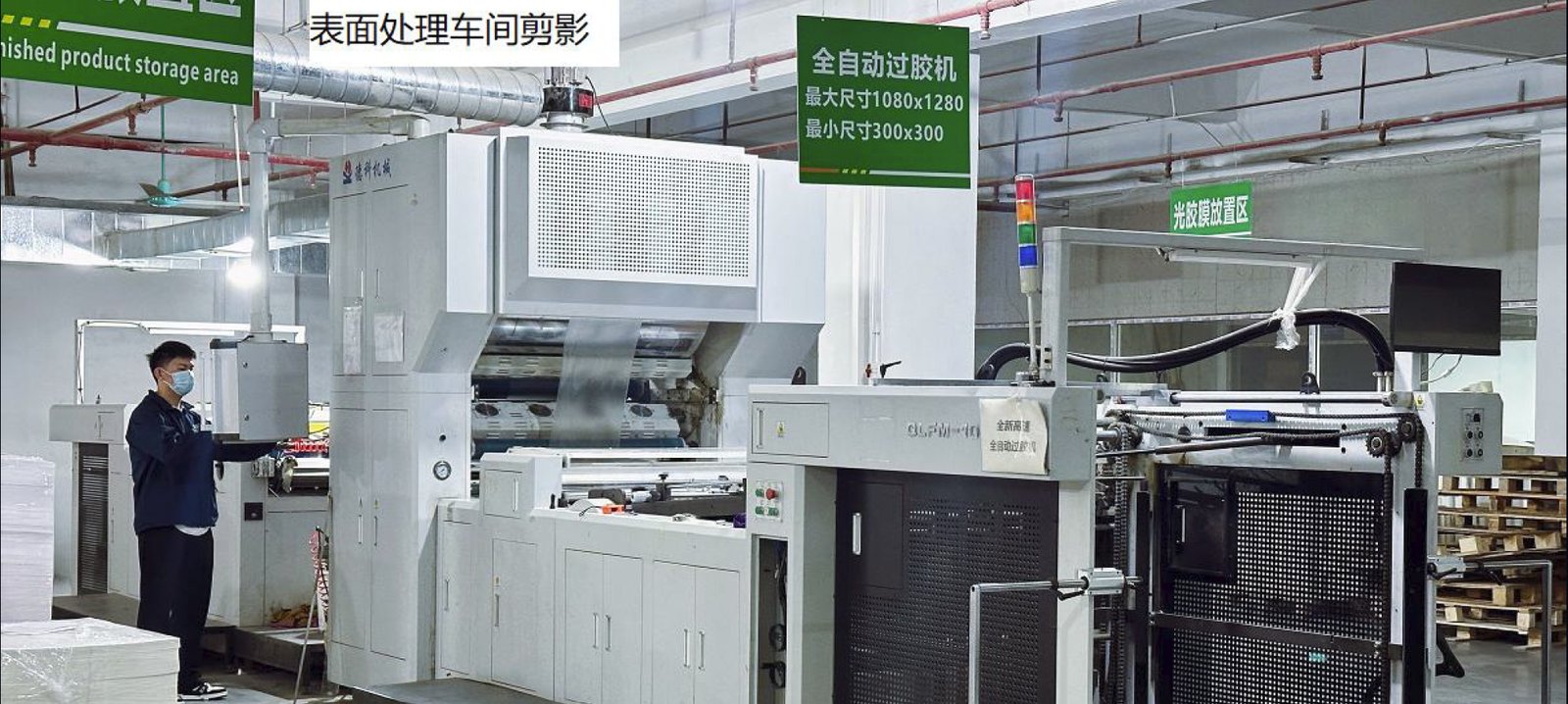
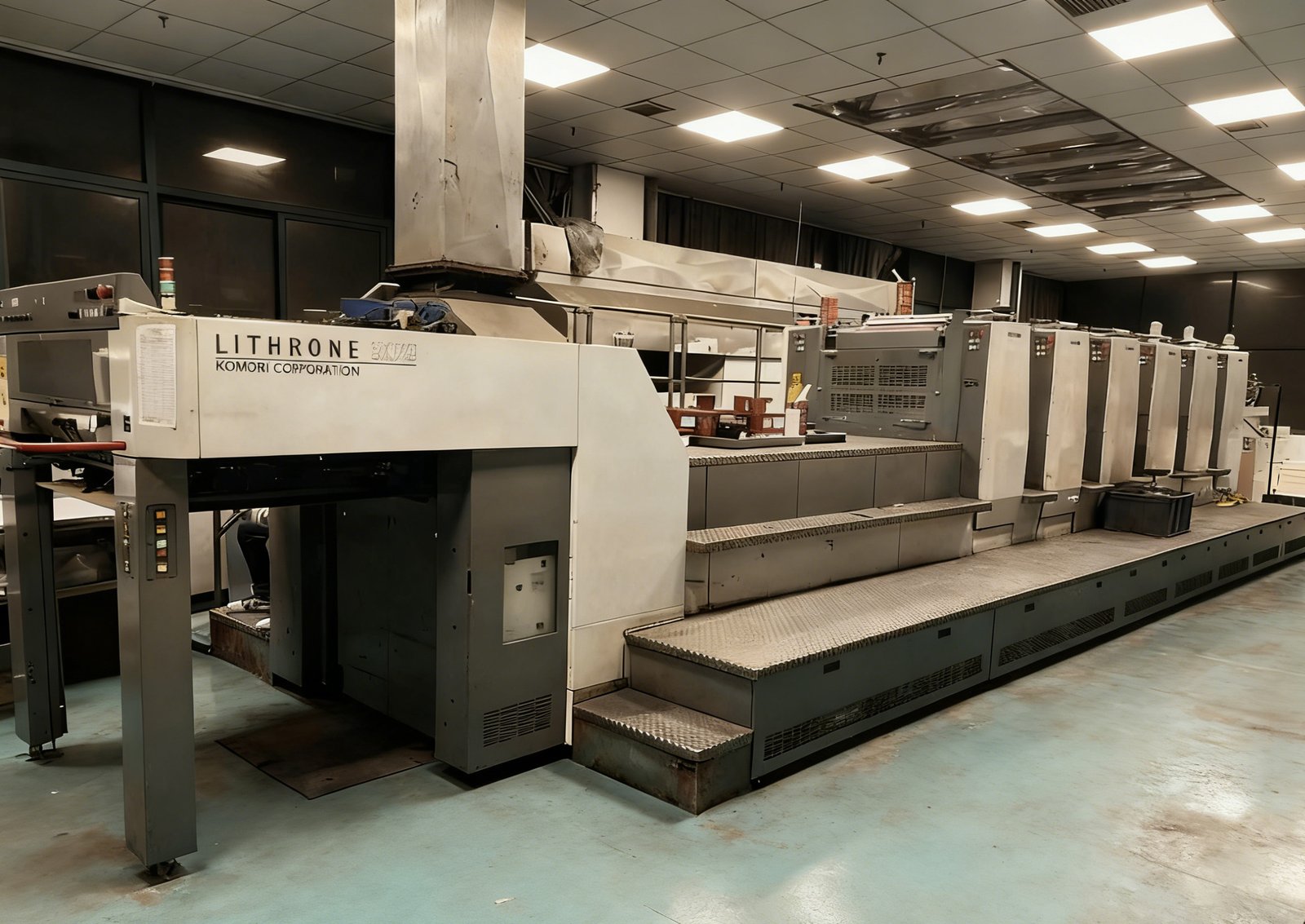
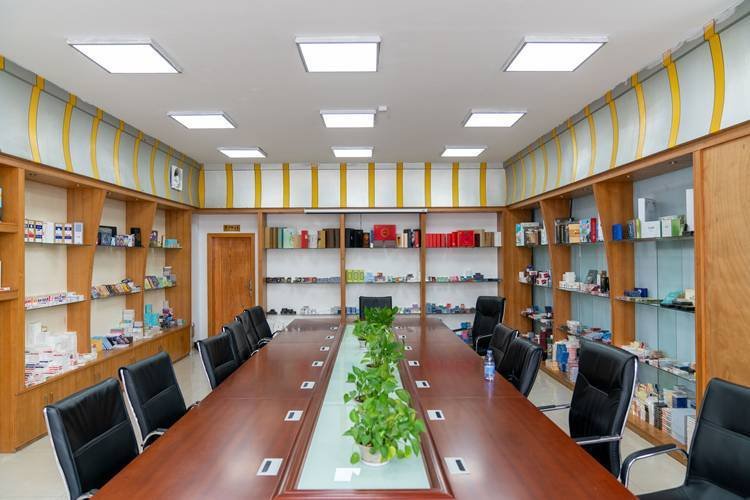
We have been making cards, puzzles, and board games since 1999. Today we run a 16,000-square-meter factory with over 200 workers. We are a direct OEM/ODM manufacturer, not a trading company. We have finished 5,000+ projects and shipped 2.3 million+ products worldwide. You get factory-direct pricing and a team that knows this work inside out.
We handle everything from design to final packing. You can order 1 piece for testing or 10,000 for a full launch — we keep the same quality at any quantity.

CE – EN 71 
amfori BSCI 
ESTS FSC COC 
SGS FSC COC 
ISO 9001:2015 -
ASTM F963-17


Why Bulk Buy From FUNWAY
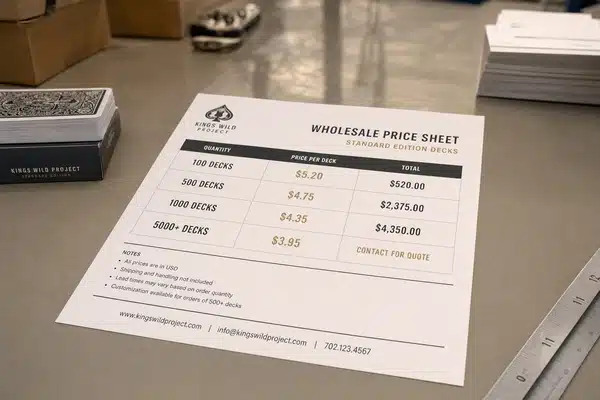
Competitive Bulk Pricing

Factory-Direct Quality Control

On-Time Delivery Promise

1-on-1 Project Support

Trusted by Global Brands
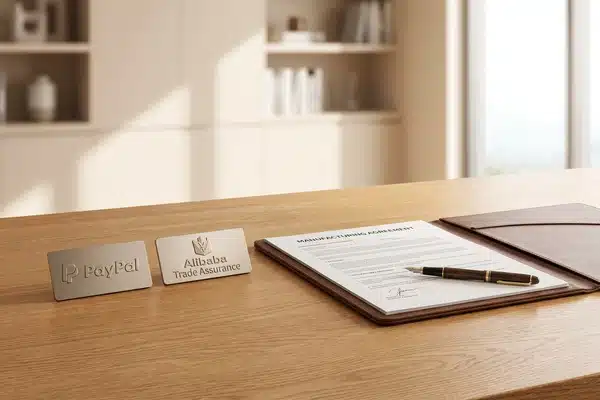
Secure Payment & After-Sales
OEM / ODM Manufacturing Process

Step 1: Project Review & Component Mapping
We do not quote from a loose parts list. We quote from a complete product plan.
Before pricing, we map every component: board, cards, tokens, rulebook, insert, box, and accessories. We check how they fit as one packed set. This keeps the quote accurate. It also prevents surprises later in tooling, packing, and freight. We check:
Getting this order right keeps your project on budget and on schedule.
Step 2: DFM Check & Manufacturing Review
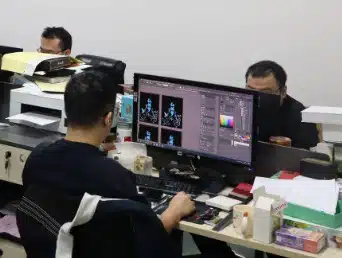
A bad sample usually starts from a design that was never checked for real production.
Before we build samples, we review your files for real-world manufacturing. We check dielines, bleed, safe zones, fold lines, card thickness, box depth, insert fit, and surface finish. We fix these issues before sampling:
If the packed set cannot close cleanly, changing the finish will not fix it. We fix the structure first.

Step 3: Sample Production & Approval
The sample is not a photo shoot. It is the production standard.
We build the first sample to test material feel, fold strength, color accuracy, box fit, insert tightness, and total weight. You review it. You approve it. This approved sample becomes the Golden Sample. All mass production is checked against it.
After this point, changes to board size, card stock, insert, or box depth will restart cost and lead time. We keep the sample stable so your bulk order stays on track.

Step 4: Tooling & Mold Setup
We open tooling only after the Golden Sample is locked.
Tooling covers die-cut tools for cards, boards, punchboards, inserts, and boxes. For special plastic parts, we may need molds or fixtures.
We never rush tooling while the design is still moving. Once the die is made, changes cost time and money. We wait for your final approval before cutting steel.
This protects your tooling investment and keeps the project on schedule.
Step 5: Pre-Production Validation
Small errors are cheapest to catch before the full run.
We run a small pre-production batch. We check color drift, cutting position, fold accuracy, board thickness, surface finish, and component fit.
If anything does not match the Golden Sample, we stop and fix it before using more material. This step saves both time and cost.
This is why we never skip pre-production validation.

Step 6: Mass Production & Assembly
A game is not done when the parts are printed. It is done when the box closes properly.
Cards, boards, Punchboards, rulebooks, boxes, inserts, wooden pieces, dice, and accessories have to work as one packed set. During assembly, we check whether the approved packing layout still makes sense at production speed.
This is critical for B2B orders. Your distributor receives finished goods, not loose parts. Every set must be packed clean, stack flat, and ship safely.
We control assembly so your goods arrive ready for shelf or warehouse.

Step 7: Final QC & Global Shipping
A perfect product can still fail if the carton is wrong.
Before shipping, we check carton count, sets per carton, gross weight, carton size, shipping marks, and barcode labels. We match everything to your purchase order.
For B2B and retail orders, we also check pallet markings and stack height.
Small direct shipments get standard export packing. We ship by DHL, FedEx, or sea freight with full tracking. Every order leaves our factory with correct paperwork.
Why This Process Matters
Most problems do not show up early. They show up after one wrong decision forces the next.
This process is not meant to slow you down. For simple projects, we keep it fast. For complex projects with many parts, retail rules, or tight deadlines, these checks protect you from costly rework.
Integration with Game Production

Printing & Surface Wear
For game mats, the print is applied to the fabric surface by heat-transfer sublimation. The print should sit into the fabric instead of forming a weak surface layer that cracks or peels easily. We still check the final mat by use condition: card movement, hand contact, rolling, edge wear, and whether the surface can handle normal cleaning without obvious print damage.
For game screens, the print is usually applied to coated paper before mounting to greyboard. The risk is not only surface scuffing. Fold areas take repeated stress, so coating, paper grain, wrap tension, and crease position need to be checked together. A screen can look good when flat but start showing wear once it is opened and closed repeatedly.
Color Matching with the Full Game Set
Mats and screens are often viewed next to cards, boards, boxes, and player aids, so color cannot be checked in isolation. Fabric mats, coated paper screens, cards, and rigid boxes do not absorb or reflect ink the same way.
We match color by material route, not by expecting every substrate to behave identically. The goal is to avoid obvious color mismatch across the game set, especially when the same artwork, faction color, or brand color appears on several components.
Safety & Material Requirements
For mats, we pay attention to rubber odor, skin-contact use, and material safety requirements. For screens, we check laminated paper, greyboard, coating, and ink suitability for the target market.
If the project requires EN71, REACH, VOC, or other compliance support, materials and test scope should be confirmed before production. We do not treat mats and screens as isolated print items; they are handled, touched, folded, rolled, packed, and stored with the rest of the game.
Box Fit & Storage
Game mats and screens have to be checked against the final box and insert layout. A screen needs enough room to store flat or folded without forcing the hinge area. A rolled mat needs enough space so the edge does not stay compressed or curl badly after storage.
We check mat size, roll diameter, screen panel size, fold direction, insert cavity, and packing order before final assembly. A mat or screen can pass as a standalone component and still create problems if it fights the box layout.
Cost Drivers for Game Mats & Screens
Game mats and screens look like simple add-ons, but the cost changes as soon as the component starts affecting material usage, edge work, folding, or box space. A mat that is larger than needed wastes neoprene. A screen with extra panels adds board, mounting, and fold-control work. The print area matters, but it is rarely the only cost point.
For game mats, cost usually starts with the footprint. A larger mat uses more neoprene and fabric, and it may need stronger backing to stay stable on the table. Thickness is not just a feel upgrade. A thicker mat rolls into a larger bundle, takes more box space, and may need the insert cavity adjusted. Edge stitching is the same. It helps protect the perimeter, but it changes the labor cost and should be part of the original spec, not something added after the mat size is already locked.
For game screens, cost moves with panel count, panel size, greyboard thickness, mounting paper, fold structure, and opacity requirements. A thicker board may help the screen stand, but it also makes the fold stiffer and increases box space. If the screen needs strong privacy blocking, board density and inside color also need to be checked.
Packing also affects cost. Rolled mats may need paper sleeves, belly bands, tubes, or larger cavities in the box. Screens need enough room to store flat or folded without stressing the hinge. If the box layout is already tight, the mat or screen can force changes to the insert or outer box size.
For cost control, we usually simplify the part that does not improve gameplay. A standard mat size, practical neoprene thickness, clean edge treatment, or 3-panel screen can often control cost better than oversized formats, unnecessary stitching, extra panels, or heavy board that the game does not really need.
PROJECT CASES
Real Projects, Real Results

Board Game “Relationship-Themed Party Game”
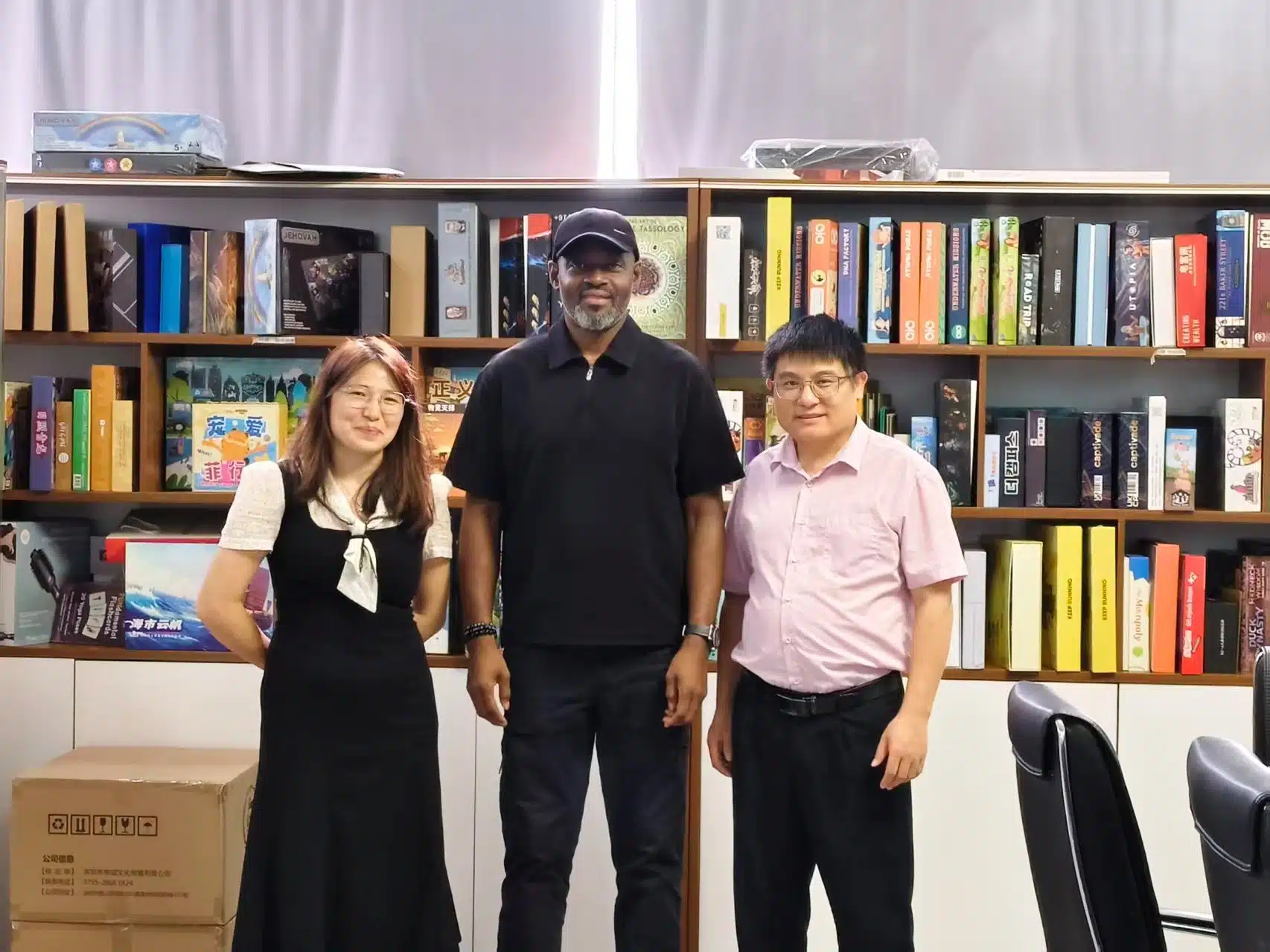
A Nigerian client came to our factory with a new board game project. The game had many characters and item pieces, but the production direction was still open. During the factory visit, we showed different board game samples we had made before, so the client could compare acrylic, metal and wooden pieces from real samples.
After checking the artwork style and sample pieces together, the project was fixed with 9 acrylic character standees, 3 metal tokens and 3 wooden game pieces. The box also used an EVA tray, because the different piece materials needed to sit in place during packing. The project later moved into sample making, and the first order was 1,000 sets.
What we did: Factory visit, sample comparison, acrylic standees, metal tokens, wooden game pieces, EVA tray, sample set, 1,000-set production run.

Board Game Packaging “Crowdfunding Box Set”
A Greek client came to us with a board game project for crowdfunding. The game pieces were already planned, but the box, rulebook and inside packing were still open. We checked the rulebook file, small parts, main board and box height first, then made the box dieline and cardboard insert layout. The client wanted the retail look and feel—not just a plain shipping carton.” There was a cardboard insert that separated the accessories and hold the rulebook and main board, so that the set could be packed nicely without a plastic tray. After receiving the sample, the client said the box and insert looked very professional amd took a unboxing video. The approved structure later moved into crowdfunding production packing.

Block Puzzle Game “puzzle-Style Pattern Game”
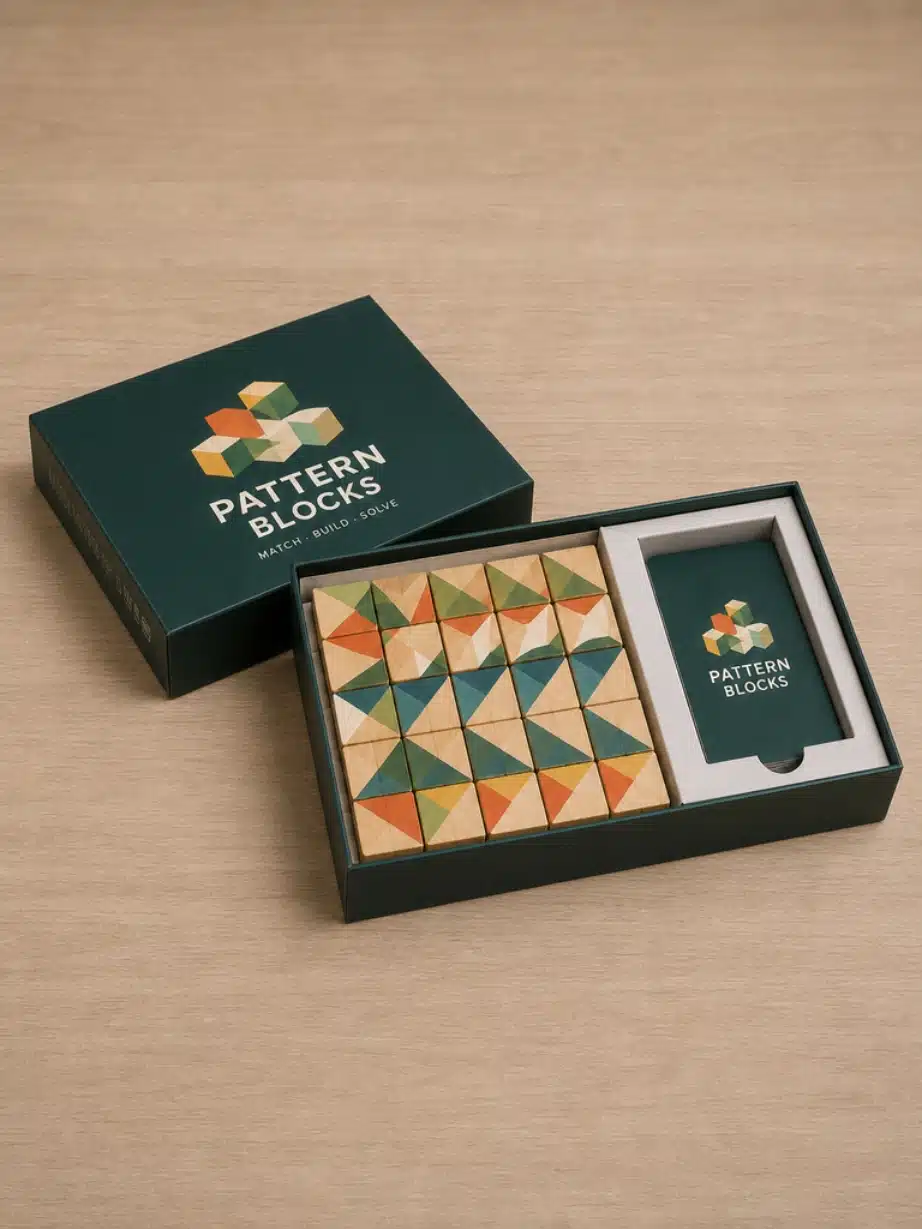
A UAE client came to us with a block puzzle game idea, similar to an Uzzle-style pattern game. We talked through the structure by video call first. The early plan was plastic blocks with sticker labels. We did not use that plan in the end. On small blocks, sticker edges can lift after repeated handling, and the surface result is not stable enough.
The sample was changed to wooden blocks with UV print. There were 20 blocks in five patterns, plus 100 cards packed with shrink wrap. Inside the box, the blocks sat on the left side and the card stack on the right side. We used a simple U-shaped greyboard insert around the card area instead of making a full blister tray. Less tooling, less packing cost.
The project moved into sample making. For the U.S. market, we also helped arrange ASTM F963 / CPSC testing documents.
-
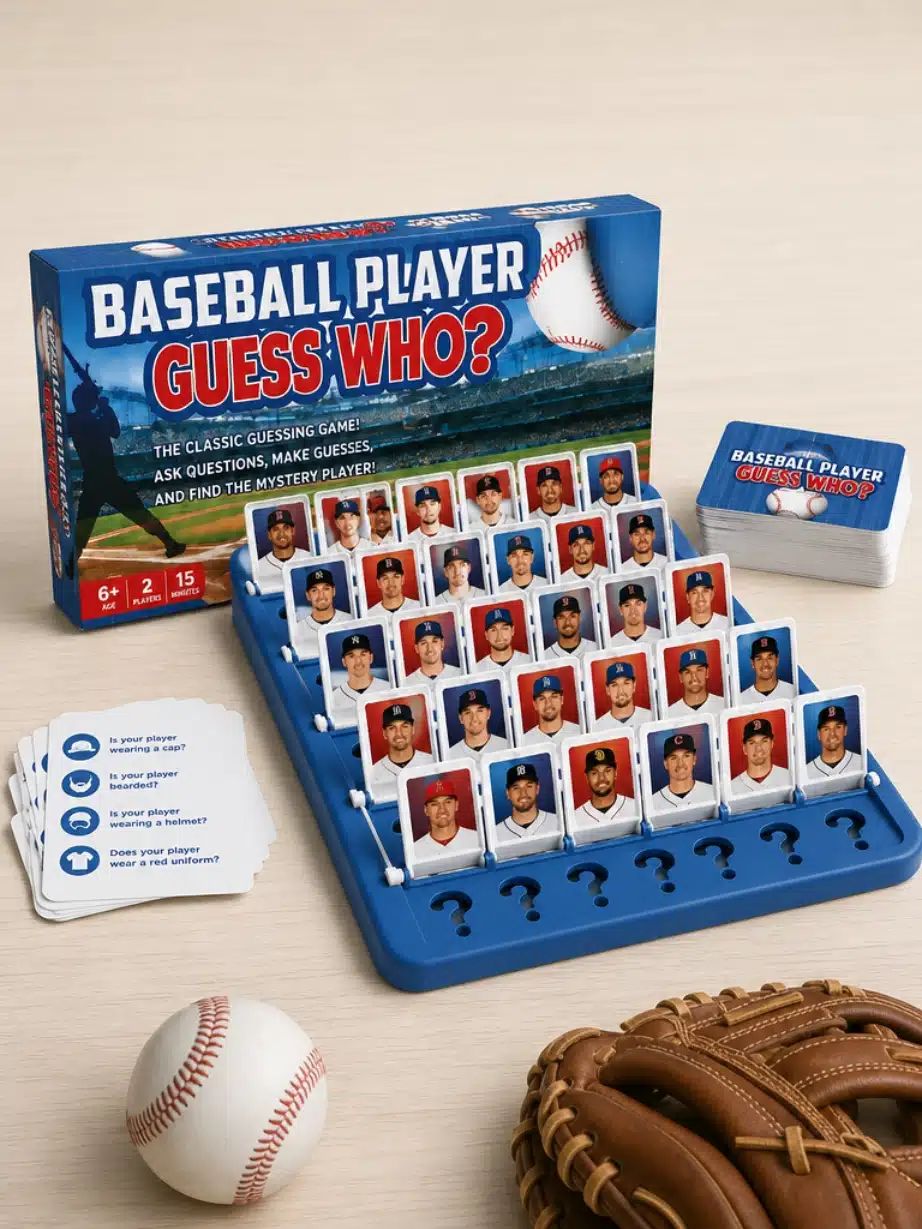
Board Game “Baseball Player Guess Who Game”
A UK client came to us with a Guess Who-style baseball player game. The project timeline was tight, so we started with standard plastic stands instead of opening a custom mold at the beginning stage.
The first samples used off-the-shelf plastic stands for holding the character cards. The layout was tested with these standard stands first, mainly to confirm spacing between cards and player positions. After early testing, the layout was fixed, and the structure was later changed into a custom injection-molded frame for mass production.
What we did: Plastic stands used for the first sample. Guess Who-style layout prepared for the baseball player cards. Small batch tested before tooling. Later switched to custom injection frame for production.
-
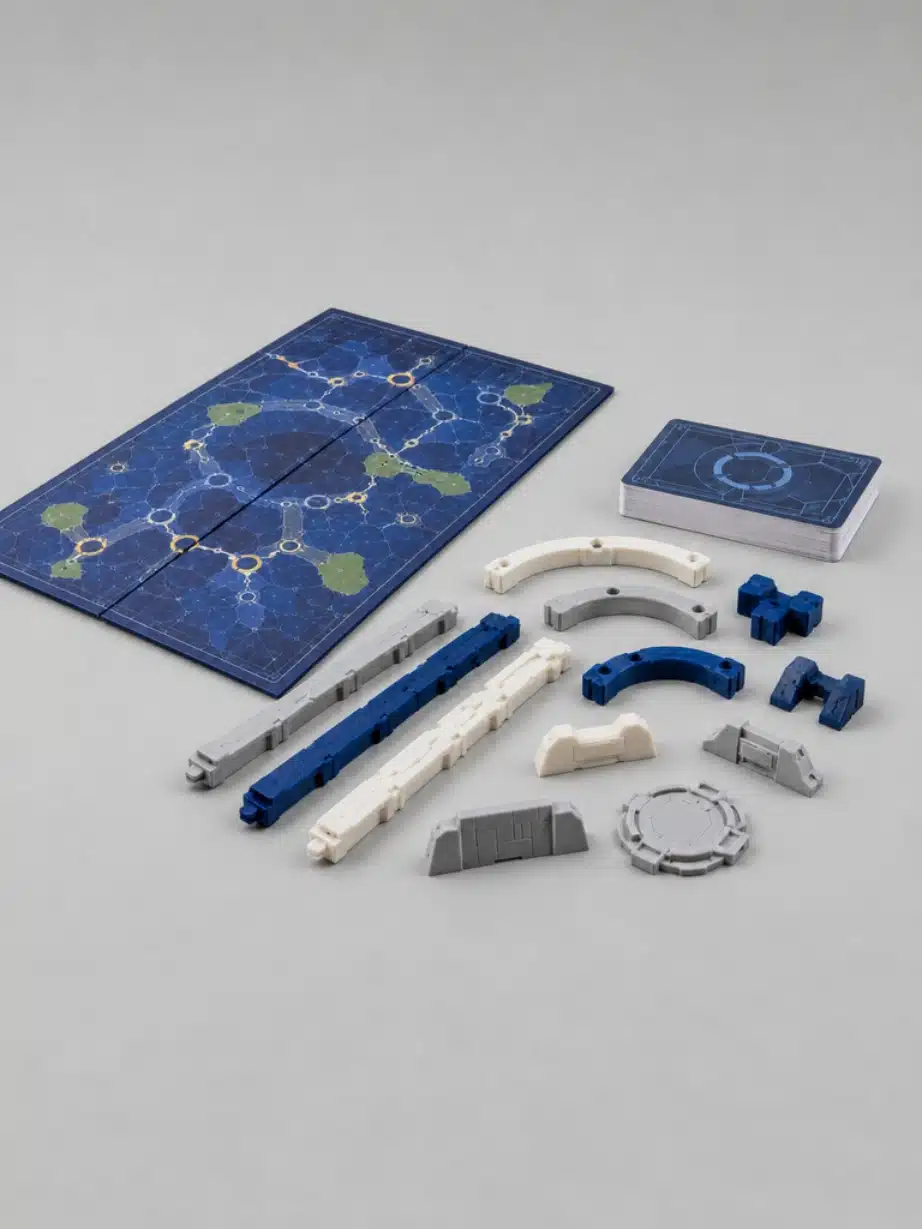
Board Game “3D Printed Plastic Components – France Project”
A French client came to us with a board game project based on modular plastic components. The concept was defined, but the production files were not ready, so the first step was rebuilding the full set into manufacturable 3D models.
We recreated the plastic parts from the client’s reference material and produced a full prototype set using 3D printing. The system also included standard printed cards and a folded board layout, which were aligned with the plastic component spacing during sampling.
The sample stage was mainly used to verify dimensions, wall thickness consistency, connection fit between parts, and overall layout stability during gameplay.
During sampling several adjustments were made before freezing the structure for small-batch production preparation.
-
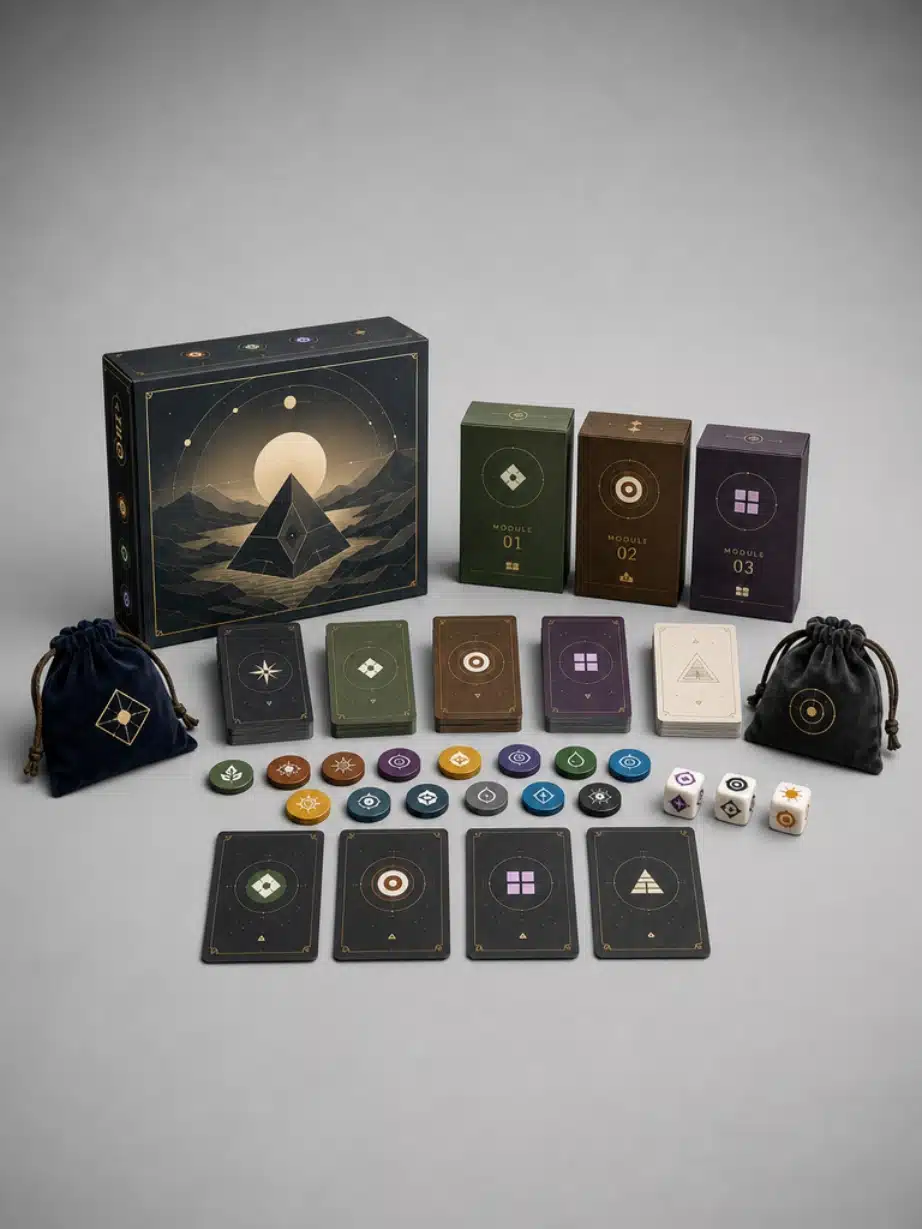
Board Game “Modular Card & Token System – Australia Project“
We were approached with a multi component tabletop game project with a fully custom tooling plan for most of the parts including tokens and dice.
To reduce tooling cost and improve the consistency of future modules, we simplified the structure by using standard ABS bases and UV printed artwork instead of fully molded tokens. Methods of dice production were also chosen based on durability of the icon and artwork requirements, balancing engraving and printing capabilities.
The project was meant to be multi-modular so that in the future the same components could be reused with only a change of the artwork.
-
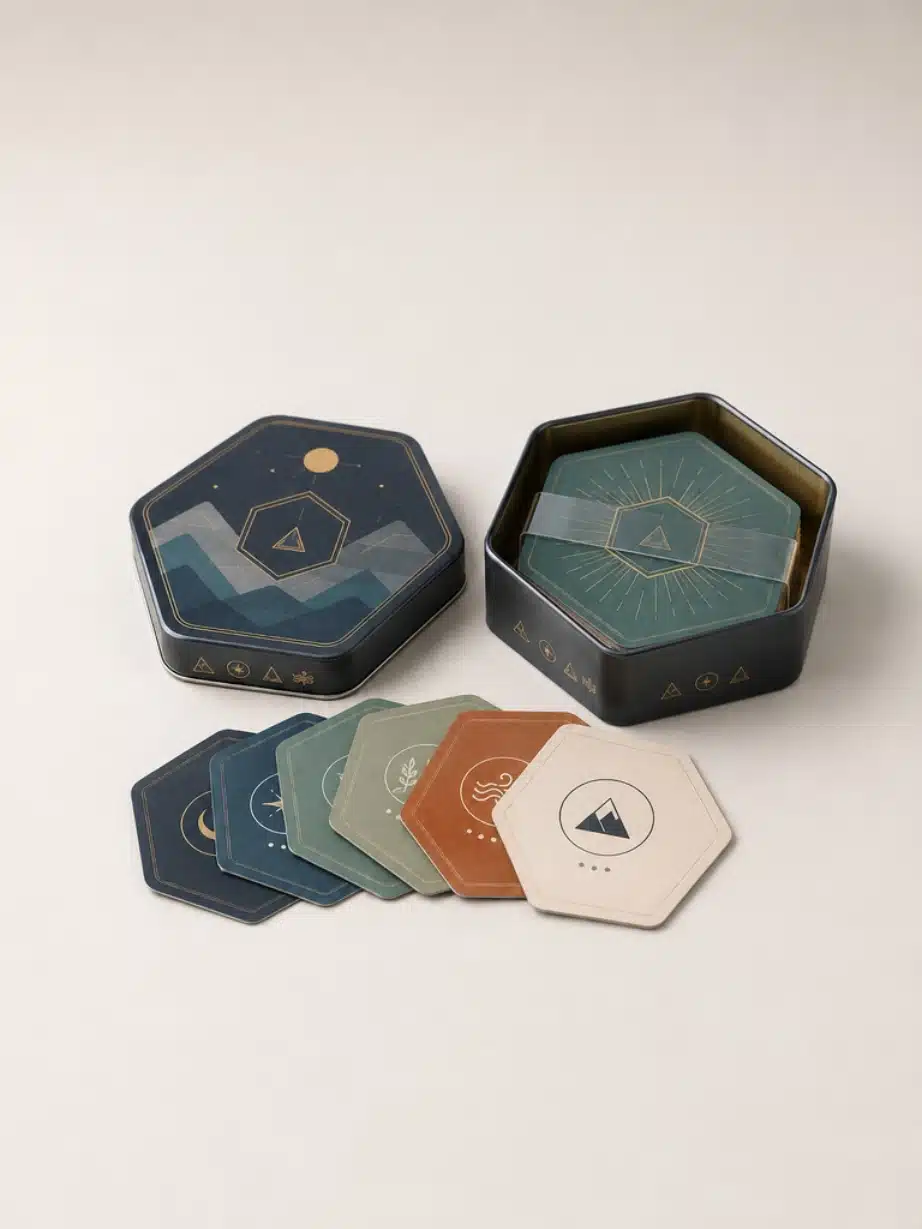
Card Game “Hex Card Set with Tin Box – US Project”
A US client approached us with a hexagon shaped card game in a tin box. The hardest thing was trying to find the right balance between die-cut accuracy for the hex cards and keeping the total packaging cost reasonable for a medium size production run.
The original request considered fully custom steel tooling for all card shapes. We reviewed the structure and suggested using a common die-cut system for reduction of tooling cost and maintaining the edge quality consistent for the hex geometry.
For the tin box we checked existing mold sizes to see if a close fit standard tin could be used instead of opening a new metal tooling. This reduced the initial cost and the sampling lead time.
We also clarified printing requirements on metal tin surfaces and matched production method according to artwork coverage and durability requirements.
What we did: Hex card die cut optimization, shared tooling review, tin box size matching, metal printing process guidance, sample coordination, production cost control.
-
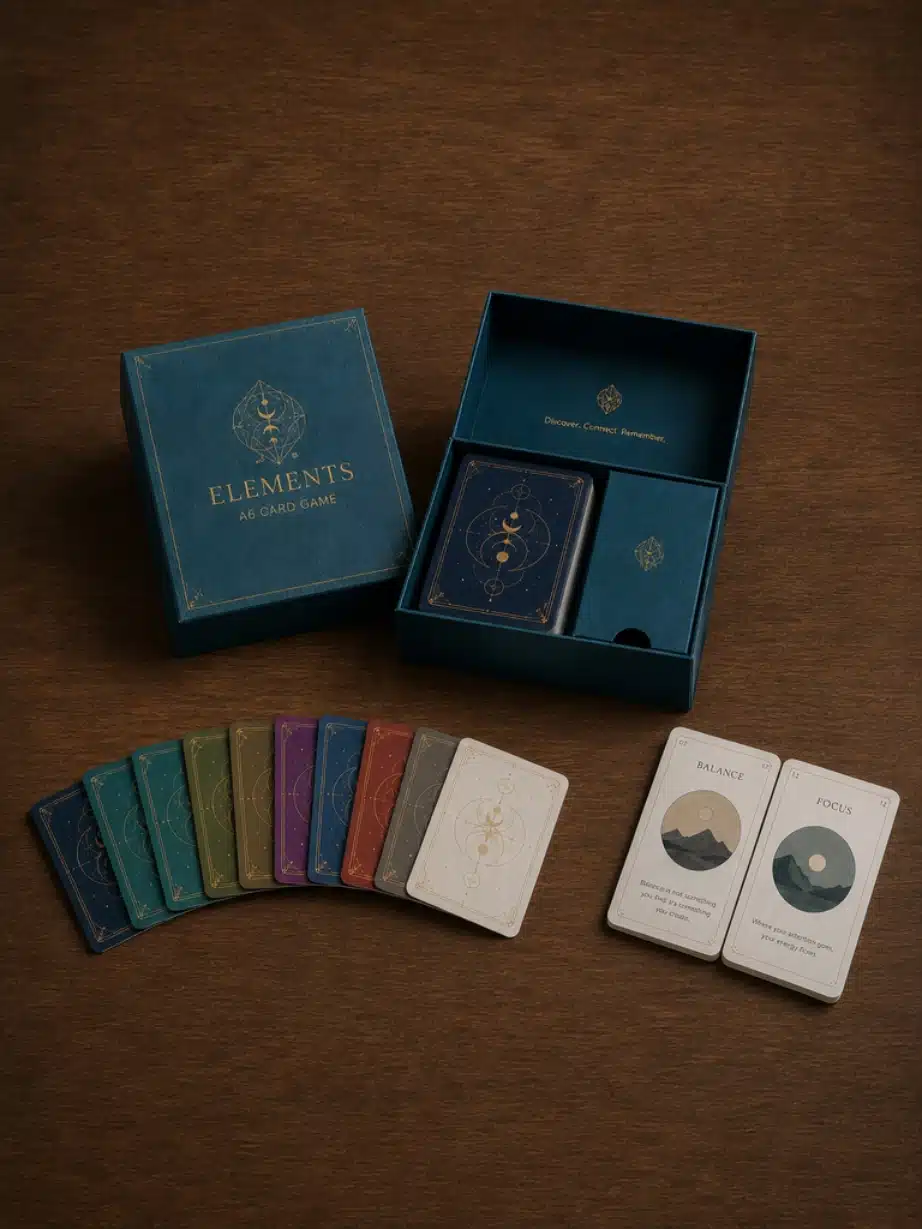
Card Game “A6 Art Card Set – Lithuanian Project”
A Lithuanian client came to us with a small-format card game project. The set used 30 A6-size cards, with 10 different card-back designs across the deck. It was not only a box order. The card size, back-side artwork, box space and paper feel all had to be checked together before sampling.
The client sent reference materials, logo files and product text, but the box artwork was not ready for production. We rebuilt the artwork on our box dieline and adjusted the layout for special paper. The box used special paper wrap on both the outside and inside. Some thin lines and small details were reduced, because textured paper does not show fine artwork like coated art paper.
After the sample was approved, the same A6 card size, card-back setup and special-paper box structure were used for production.
-
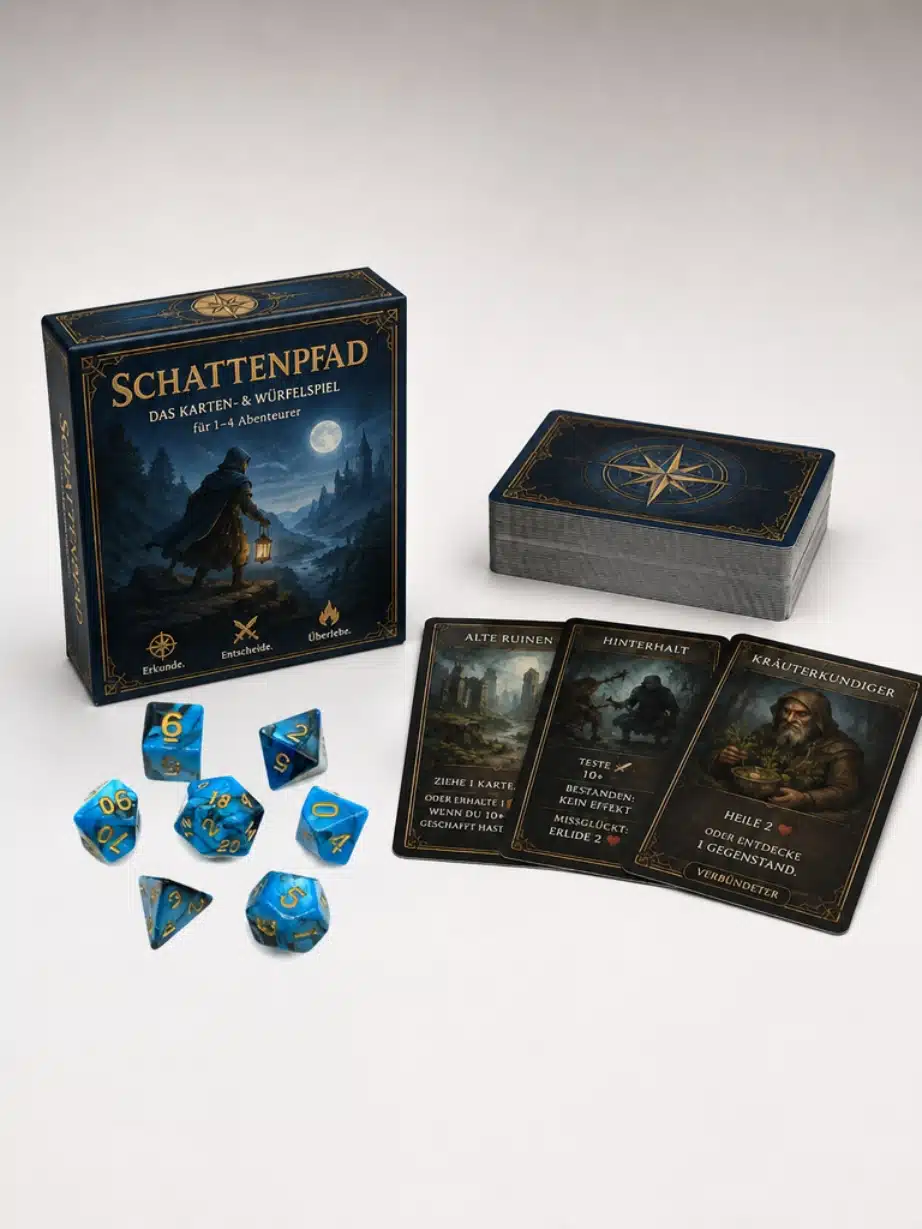
Card Game “Card & RPG Dice System – Germany Project”
A German client requested a compact RPG card game with a polyhedral dice set to control gameplay mechanics and randomness. We assisted the entire component optimization from the structure to the production feasibility.
We considered dice options from common acrylic RPG sets to premium resin styles, and landed on a durable solution that would be appropriate for repeated tabletop use. Card materials have been optimized for shuffle performance and consistent print quality.
The final design was cards and 7-piece RPG dice in a cost effective boxed layout for Kickstarter production.
-
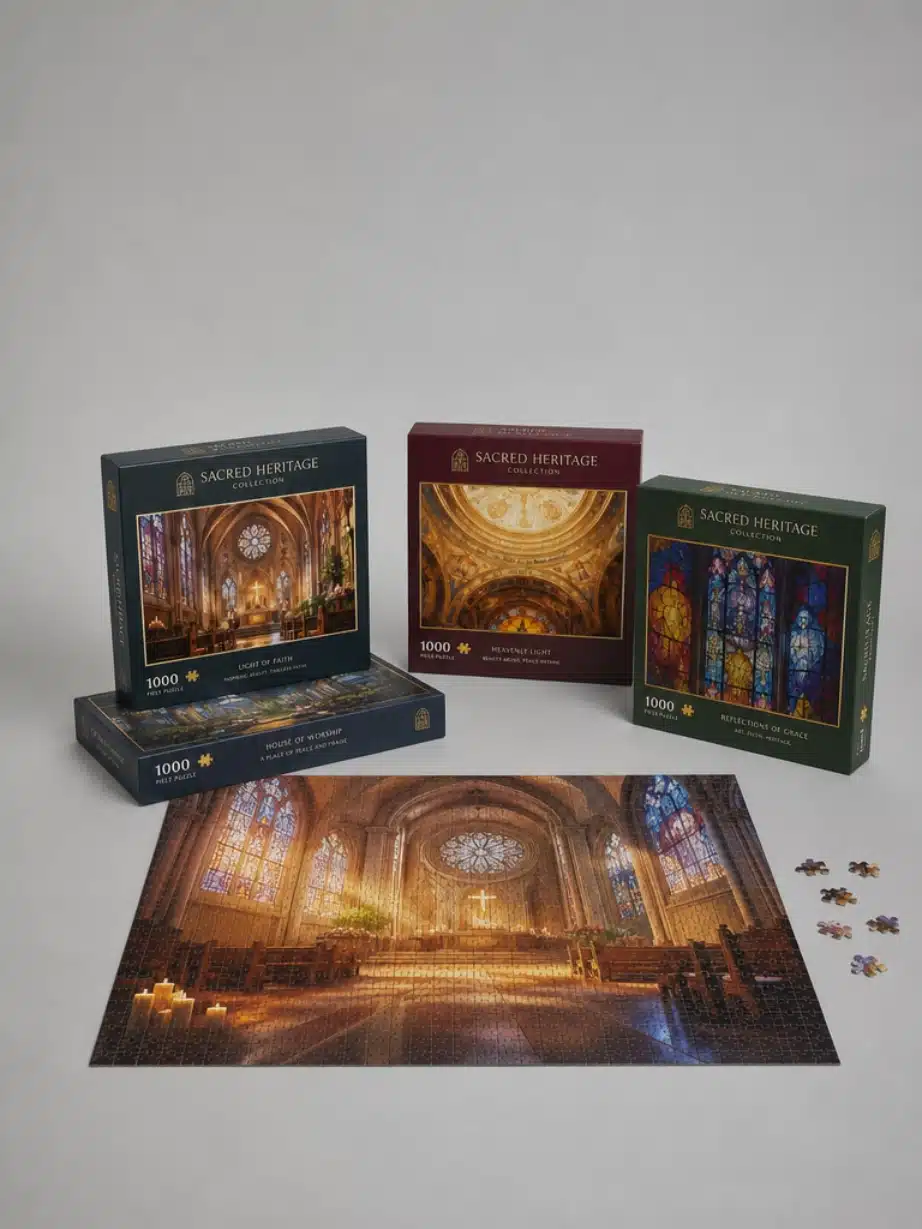
Jigsaw Puzzle “Church Heritage Puzzle Project – Indonesia
An Indonesian church organization came to us with a large-format puzzle project for gallery-style religious display. The idea was to assemble several large puzzle artworks and display them as finished wall pieces.
The original work was divided into sets of 1,000 pieces of puzzles each per theme. We supported the production set-up including offset printing, puzzle die-cutting and packaging structure based on a small batch production requirement.
In development we also thought about the overall image layout so that the artwork can be divided into multiple panels without cutting off important visual elements at joining lines. This avoided misalignment issues when the puzzles are put together and displayed side-by-side.
The last production was planned as a small pilot batch for scaling up.
What we did: puzzle production setup, multi-panel image splitting consultation, 1000 piece puzzle die cutting, packaging coordination, small batch production (200 sets), gallery display layout consultation.
-
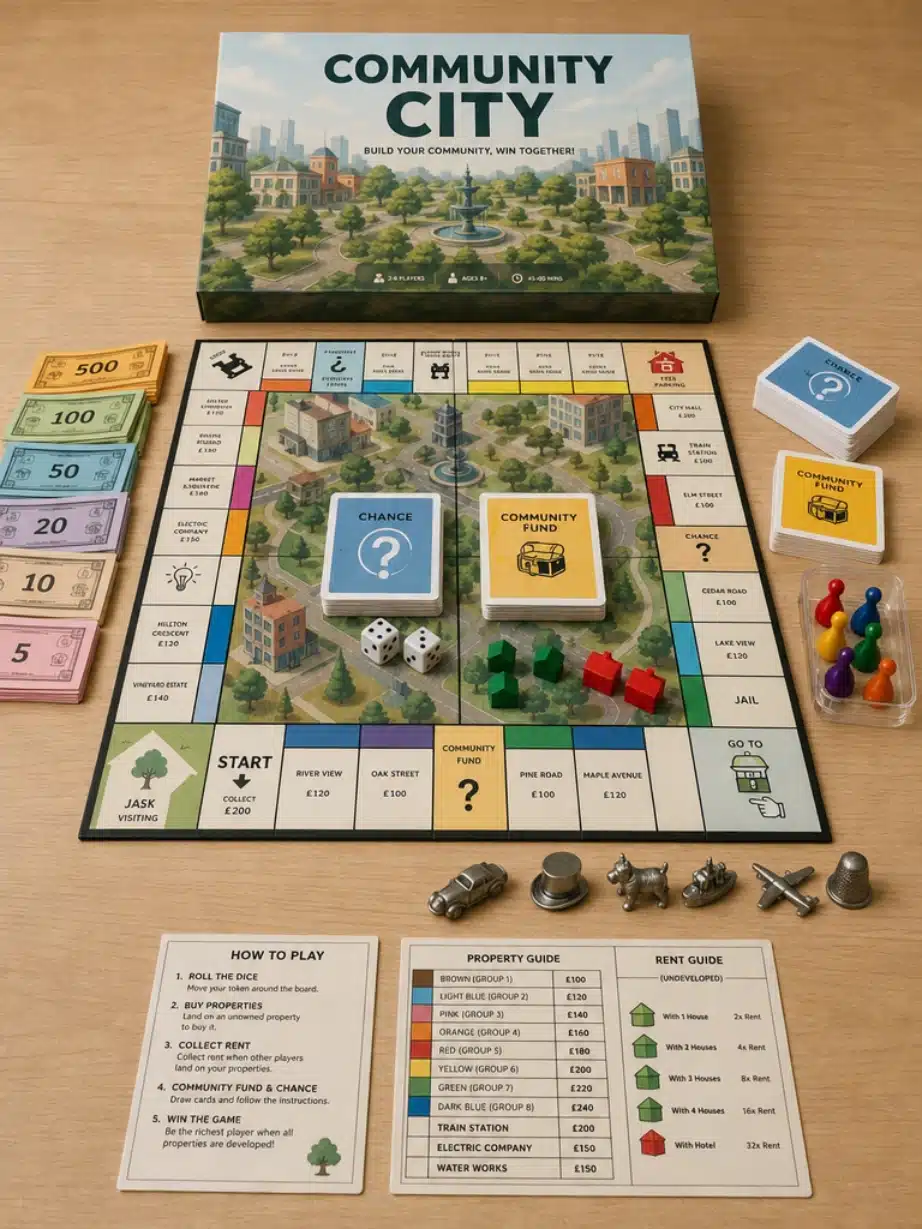
Board Game “Monopoly-Style Trading Game – U.S. Project”
A U.S. client brought this project to us in February. The game idea was already close to a Monopoly-style property trading game, but the physical parts were not ready for production yet. We made the first sample with a quad-fold board, paper money, pawns, dice and house tokens. The packing was adjusted once before the bulk order.
At the beginning we used standard game pieces first. No new mold at this stage. The client wanted to test the rules and artwork before putting more budget into custom parts. After sample approval, the same build went into a 3,000-set run. Before shipment, we also helped arrange SGS China testing for ASTM F963 / CPSC requirements for U.S. sales.
What we did: Quad-fold board, poker-size cards, paper money, pawns, house tokens, 16mm dice, SGS China test, 3,000 sets shipped.

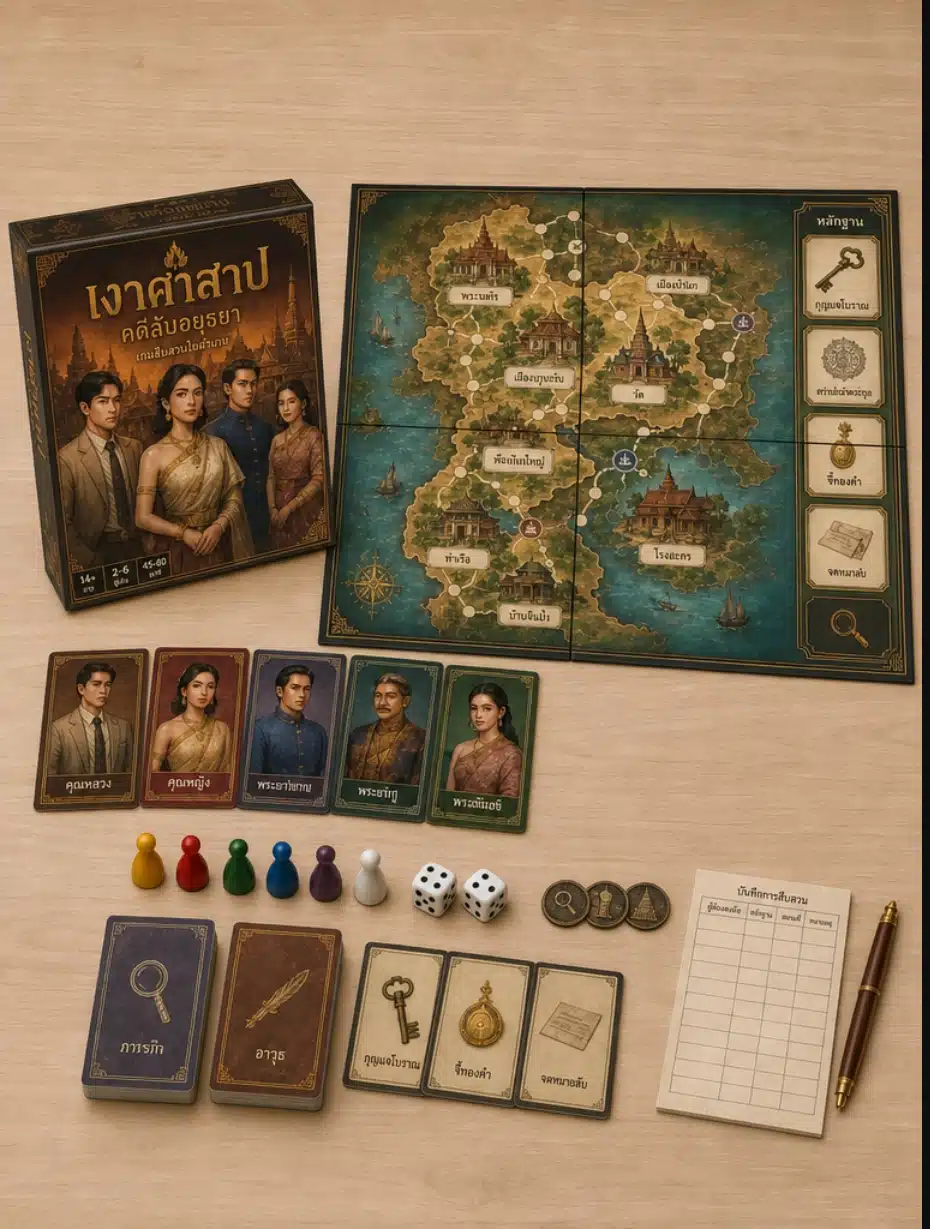
Board Game “Clue-Style Mystery Game – Thai Project”
A Thai client came to us with a mystery deduction board game idea. The rough direction was already close to a Clue-style game, but the physical parts were not ready for production. We helped fix the card groups and card quantity first, then prepared dieline templates for the cards, board and box.
The first images were made with AI, but some faces, rooms and board details were not suitable for direct printing. We helped the client find a designer in China to rebuild the artwork into printable files. Once the sample was approved, the same card count, board layout and packing structure was adopted for the bulk production.
What we did: Card groups, board dieline, box dieline, AI art redraw, sample set, bulk game packing.
YOU MAY ALSO LIKE
Manufacturing Insights
Custom Board Game Pricing Guide (2026)
Wondering how much it costs to make a board game? Get real factory pricing examples ($4.5-$26/set), hidden shipping fee calculations,…How to Calculate the True Landed Cost of a Custom Board Game
Stop losing your crowdfunding profit to unexpected shipping bills. Learn how to calculate the true landed cost of a custom…Puzzle Materials: Blue core Cardboard Vs. Standard Cardboard
What material are puzzles made of? Learn about puzzle cardboard material from a real factory. We compare blue core, white…What to Prepare Before Requesting a Custom Board Game Quote
How to Organize Your Specifications Before Contacting a Manufacturer Requesting a custom board game quote should be a straightforward step,…