
How to Manufacture a Board Game: From Prototype to Mass Production
A prototype proves the game works. It does not prove the game is ready for mass production. The real board game manufacturing process starts when files, packing logic, proofing method, and cost-sensitive components are locked tightly enough for repeatable production.
If you are trying to figure out how to manufacture a board game, the first thing to understand is this: most prototype-stage decisions are still soft. A playable sample is useful, but it is not the same as a production-safe product.
This is where many projects go off track. The team approves the look, approves the gameplay, maybe even approves a sample set, and assumes the next step is simple factory execution. It usually is not. To mass produce a board game, you have to convert a creative prototype into a stable production structure. That conversion is where cost starts to move, delays start to appear, and weak assumptions start to get expensive.
In other words, the real board game manufacturing process begins after the prototype looks “done.”
And that process is not mainly about printing. It is about budget lock-in.
What Actually Changes When a Prototype Moves to Final Production?
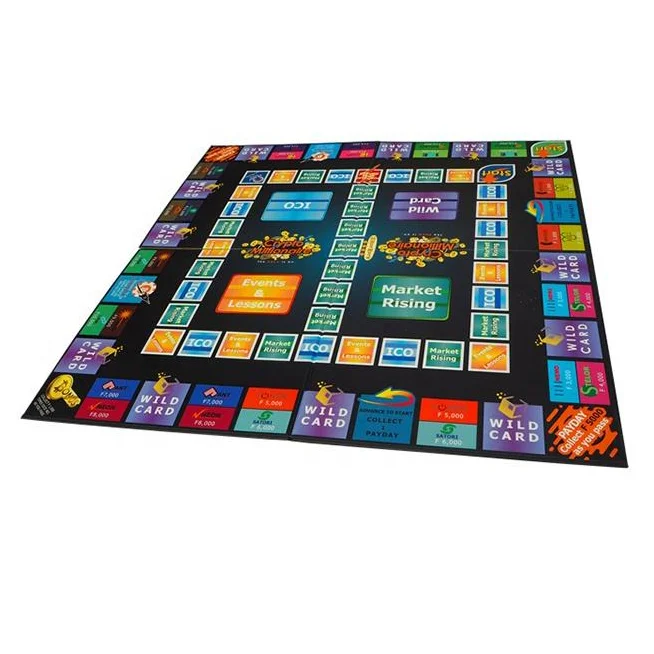
The short version: a prototype only needs to work once. A mass production product needs to work repeatedly, under tolerance, under packing pressure, and under freight constraints.
That is a completely different standard.
A lot of creators think the transition from prototype to final product is mostly a visual refinement stage. In practice, it is more of a constraint stage. The project has to stop behaving like an idea and start behaving like a manufactured item.
The usual failure is not at the factory floor. It happens earlier, in the order of decisions.
Design teams often optimize art completion first, then component count, then extras, and only later ask whether the box depth still makes sense, whether the insert is still workable, or whether the custom miniature decision has broken the budget model. That order is backwards.
The more workable sequence is:
That sounds strict. It is. But loose decision order is exactly why some projects look cheap at quotation stage and expensive at production stage.
A prototype can hide problems because it does not have to survive repeat production. Mass production does.
Digital Proofing vs. Physical MPC: Which One Do You Actually Need?
This is one of the first decisions that should be made correctly, because the wrong proofing method wastes either money or time.
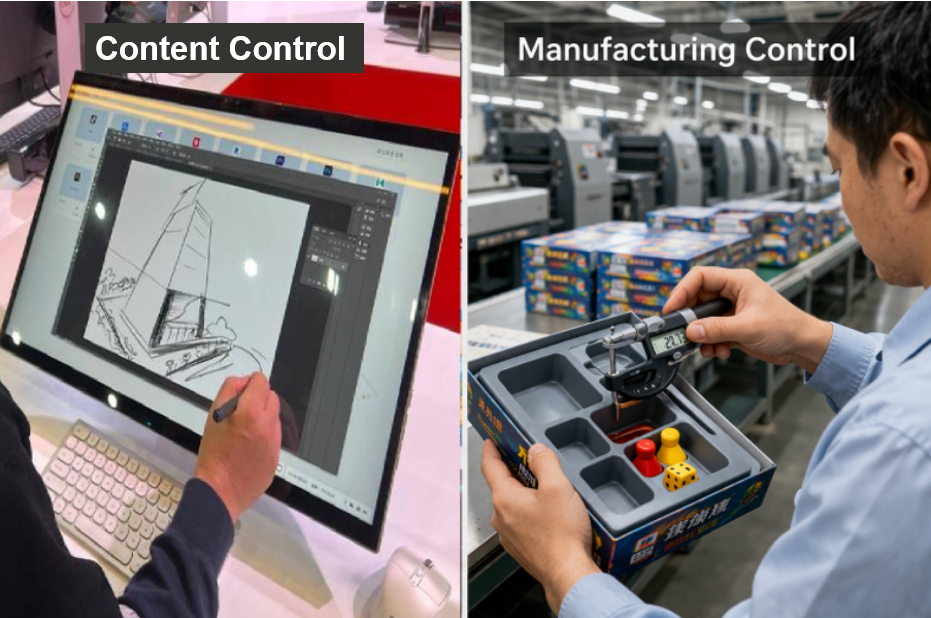
A digital proof is mainly for content control. It helps confirm layout, text, artwork placement, and obvious file issues before production starts. If your game is structurally simple, this may be enough.
A physical MPC — meaning Mass Production Copy — is for manufacturing control. Not presentation. Not marketing. It is there to test whether the approved design still works once it becomes a real object.
That distinction matters.
If your project is mostly standard-size cards, standard box structure, no custom insert risk, no molded parts, and no tight packing logic, digital proofing is often the better decision. Going physical too early can create noise instead of clarity.
But if the project includes a rigid box, insert fit, stacked components, custom trays, multiple deck heights, or custom plastic miniatures, digital proofing alone is usually too optimistic. It can tell you the art is placed correctly. It cannot tell you the tray wall feels too tight after wrap thickness is added. It cannot tell you the board fold pushes the packed height more than expected. It cannot tell you whether the miniature base starts fighting the cavity after real production tolerance is applied.
That is where the MPC earns its cost.
💡 Pro Tip
Our engineering bias is simple: if the project can fail through fit, tolerance, or packing sequence, a physical MPC is usually cheaper than skipping it. Not always. But usually.
There is also a boundary condition here. If your component count is still moving, or the insert is still being rethought every week, then doing a physical MPC too early is not smart either. At that point, you are not validating production. You are sampling a moving target.
So the decision advice is not “always do both.” That sounds complete, but it is weak advice.
The better question is: What are you trying to control — content error, or manufacturing risk? That answer should decide the proofing path.
Why File Checking Matters More Than Most Buyers Expect
Most “final artwork” is not actually ready for production.
That is not a design criticism. It is just what happens when prototype-stage files are pushed too quickly toward manufacturing.
The pre-production phase is where this gets exposed. File checking sounds administrative. It is not. It is where small technical mistakes start turning into real schedule damage.
The usual problem is not one giant file error. It is a stack of minor issues that each look manageable on their own:
None of these sounds dramatic. Together, they create revision drag.
This is why we treat file checking as a budget lock-in step, not a cleanup step.
The usual decision sequence should be:
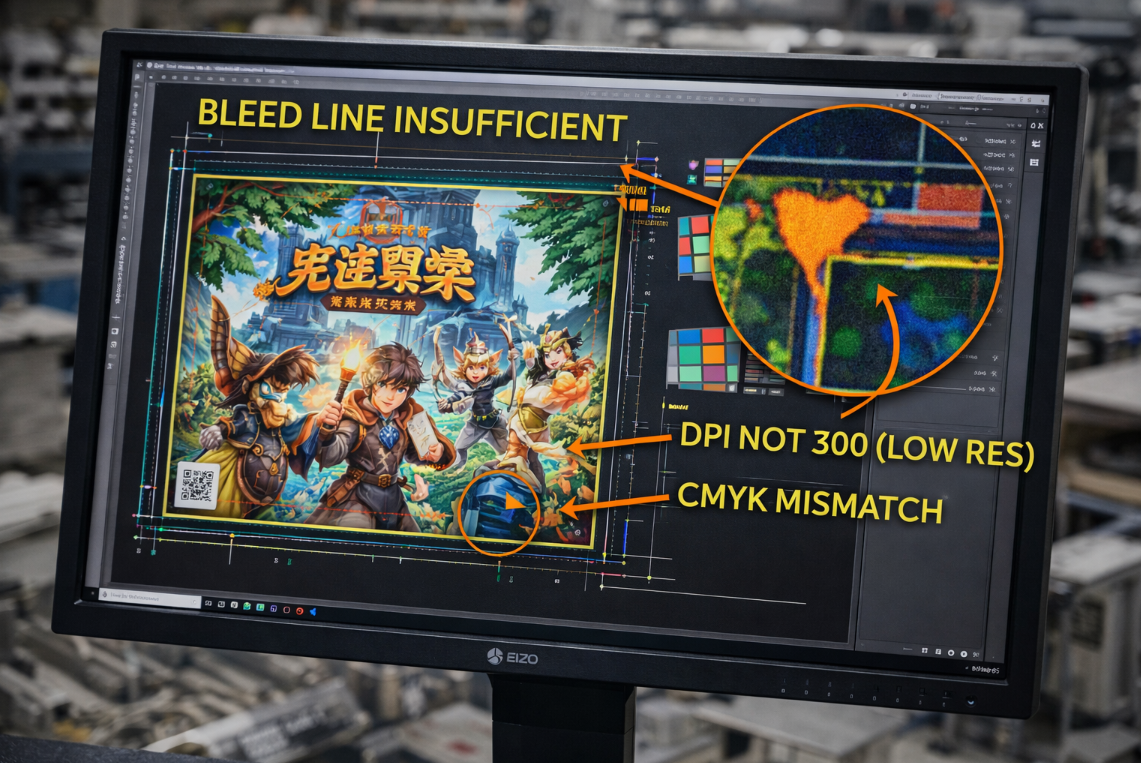
A common mistake is spending too much time discussing finish options before the files are technically stable. That is the wrong order. Finish choice matters, but if the files are still weak, that is not the real problem yet.
Another mistake is locking packaging artwork before the packed thickness is stable. Card count drift, thicker rulebooks, token bag choices, and board thickness do not sound like large changes, but they can quietly shift the box depth and then hurt carton efficiency later. Designers often optimize how the box looks before confirming whether the packed structure is actually settled. From a manufacturing view, that is backwards.
We are not turning this article into a full prepress manual, so we will leave some of those file risks there. But the useful takeaway is this:
If you want to mass produce a board game smoothly, file checking is not a formal step added by the factory. It is the point where the prototype files either become executable — or reveal that they are not.
Why Custom Plastic Miniatures Change Cost Before Production Starts
This is the cost topic that gets underestimated most often.
When a project includes custom plastic miniatures, buyers sometimes compare them to printed components and assume they are just another line item. They are not. Miniatures change the cost model earlier and harder because they introduce tooling and molding.
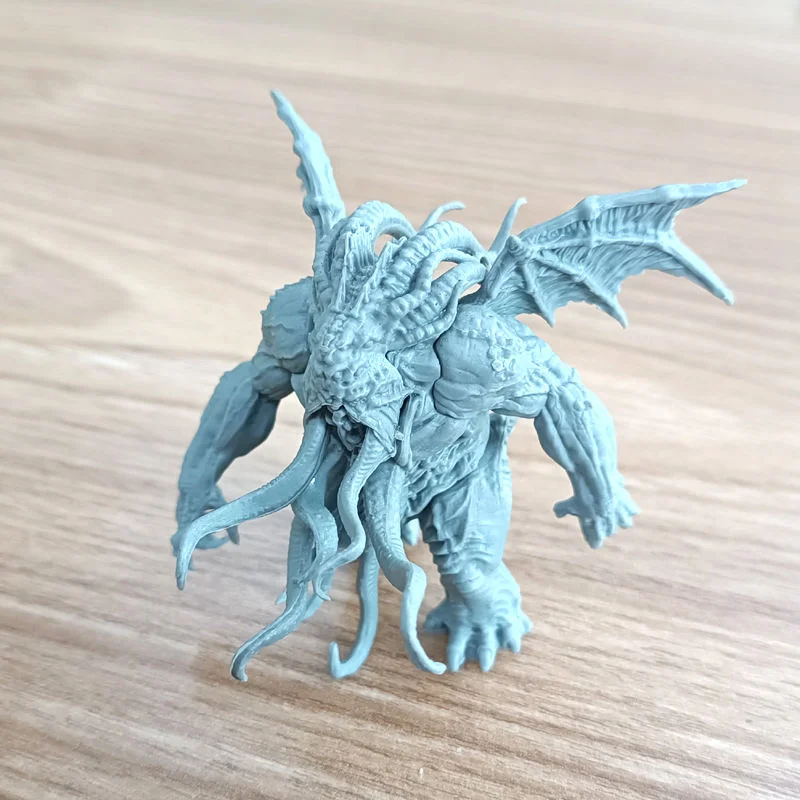
elf is not the main issue. The upfront commitment is.
A printed deck, board, or box scales through print and converting. A custom miniature has to become manufacturable first. That means mold development, trial review, and sometimes adjustment before the part is stable enough to repeat. So the cost does not begin with the unit. It begins with the structure needed to produce the unit.
That is why tooling feels expensive, especially on smaller runs. The buyer is seeing an upfront cost that printed parts do not expose in the same way.
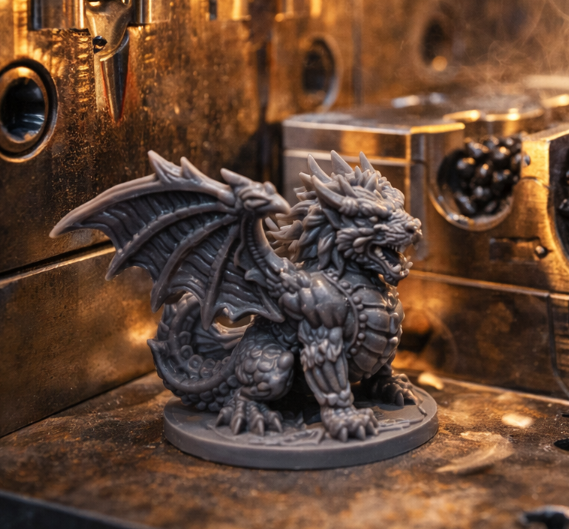
The mistake is usually in decision order.
Teams often fall in love with the visual value of miniatures early, then try to cut packaging or print quality later to compensate. That is bad cost control. Cost control usually fails at step 2 here, not step 5.
The better sequence is:
If the game is still in market testing, standees or meeples may be the better engineering decision even if they are less exciting. That is not because miniatures are wrong. It is because stage mismatch is expensive.
On the other hand, if the miniature is central to gameplay clarity, product identity, or retail positioning, then avoiding tooling can also be the wrong decision. In that case, the miniature is not decoration. It is part of the product logic.
Miniatures also affect lead time, not just budget. Tooling work has its own review rhythm. That is one reason a board game with molded parts should not be planned like a board game made only from printed components.
We are not going deeper into resin routes, part splitting, or sculpt simplification here. That belongs in a separate article. But if your current question is why custom miniatures raise the entry cost of board game manufacturing, this is t
A Realistic Board Game Production Timeline: From PO to Ocean Freight
A lot of timeline confusion comes from starting the clock too early.
Buyers often treat the timeline as if it begins at PO and then flows directly into production. In practice, the schedule only becomes reliable after the project is locked tightly enough to use production capacity without reopening core decisions.
So the practical sequence looks more like this:
So when clients ask for a “board game production timeline,” the honest answer is not one neat number. A simple game and a component-heavy game should not be given the same implied promise.
Still, one engineering judgment is safe to make:
If your project is still revising files, changing packing assumptions, or debating miniatures after PO, your timeline is not actually locked yet. And that is usually where delays begin.
Warning Before You Move to Mass Production
⚠️ Warning: If your SKU logic is still unstable, your card counts are still moving, or your insert structure is still being redesigned after the quote stage, the cost model above will start to break down.
If your game is still in heavy playtest mode, this article is not your operating model yet. You are still in design-stage constraint discovery, not final manufacturing planning.
And if your project depends on custom plastic miniatures mainly because they looked good in the prototype, but your sales volume is still uncertain, be careful. That is one of the most common ways a strong concept turns into a weak production decision.