

Logistics Black Holes: Redefining Certainty in Custom Board Game Manufacturing
How We Use “Certainty” to Redefine the Custom Board Game Experience
“I live just 30 miles from their shipping site, but almost a month has passed and my board game still hasn’t arrived.”
This is a real complaint left on BoardGamesMaker. The short physical distance is amplified by the logistics “black box” into an insurmountable psychological gap.
As a manufacturer specializing in custom board games, we see firsthand how designers and players expend enthusiasm in this opacity. For B2B buyers—publishers, Kickstarter creators, and small publishers—delays are not just inconvenient; they disrupt launch schedules, marketing campaigns, and fulfillment planning.
In this article, we combine data, root cause analysis, and a comprehensive engineering-driven solution framework to tackle industry pain points and restore predictability in the custom board game supply chain.
Three Key Data Points: Industry Pain is Real
Analysis of user feedback and industry reports highlights three concentrated complaints (Based on internal analysis of 500+ global board game delivery reviews):
Root Causes: Misalignment Between Physical Flow and Psychological Expectations
Why does a 30-mile distance feel so far? Traditional custom board game production and logistics focus on physical movement, ignoring the psychological needs of the buyer.
The core complaint: lack of process control.
B2B buyers are not just waiting for cardboard—they are waiting for social experiences: family game nights, friends’ gatherings, or design approval to continue development. Board games function as social media for real-world interactions, triggering engagement and interpersonal communication. Delays, opaque ETA, and unhelpful customer service transform anticipation into anxiety.
Reducing Lead Time in Board Game Manufacturing (Segmented ETA Commitments)
Production and logistics are divided into four stages, each with data-driven ETA commitments:
💡 Pro Tip
Engineering detail: Soy-based ink drying may add +1 day in high humidity seasons.
📝 Note: Lead times vary by destination. For European or East Coast US clients, total transit may extend to 45–55 days due to sea freight duration.
⭐ Benefit
Enables actionable planning for launch schedules, marketing, and inventory decisions.
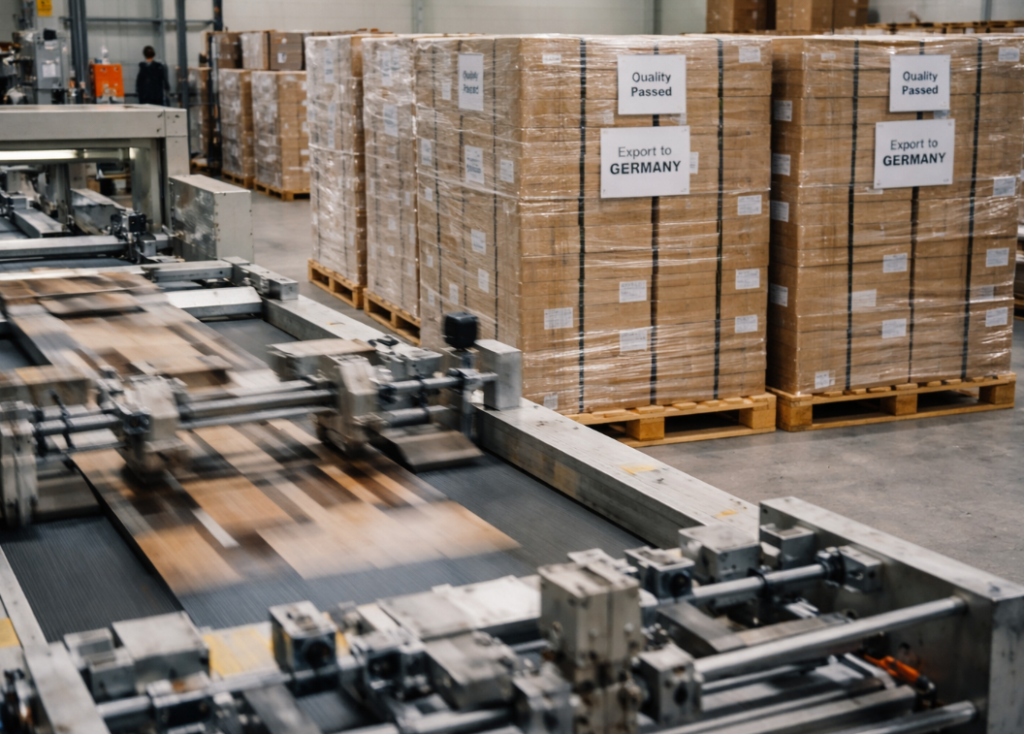
Enhancing Supply Chain Transparency for Publishers (Manual Milestone Verification)
⭐ Benefit
Provides buyers with a clear understanding of order progress, reducing uncertainty and building trust through hands-on verification.
Mitigating Delivery Risks with Proactive Customer Intervention

⭐ Benefit
Reduces inquiry resolution time, strengthens buyer confidence, and mitigates last-mile anxiety.
Case Study – From 30-Mile Anxiety to Transpacific Confidence
Scenario: A California-based designer ordered 800 custom board games for a crowdfunding project; destination ~40 miles from US West Coast warehouse.
Stage | Problem | Solution | Duration |
|---|---|---|---|
Production | Delayed updates | Flexible ISO 9001-compliant supply chain, automated inspection, completion photos pushed to designer | 8 working days |
Shipping | Unclear ETA | Segmented ETA: Sea 15–20 days to Long Beach + Customs 3 days + Last Mile 2 days (typical for West Coast US) | 20–25 days |
Critical Intervention | Courier backlog | Customer service proactively coordinated with local courier to expedite delivery | 4 days |
Delivery | Anxiety resolved | Designer received package fully informed; confidence in full-scale production | 29 days (Note: Lead times vary by destination. For European or East Coast US clients, total transit may extend to 45–55 days) |
📝 Note: Lead times vary by destination. For European or East Coast US clients, total transit may extend to 45–55 days.
Tabletop Analogy: Structured updates function like turn-based mechanics in cooperative board games. Just as players rely on visible progress to make decisions, publishers rely on milestone-based notifications to plan launches and marketing campaigns.
Conclusion
In board games, each card and token is a gateway to real-world interaction. Manufacturers’ responsibility extends beyond producing components—they protect the anticipatory experience of social gatherings.
By leveraging Segmented ETA Commitments, Manual Milestone Verification, and Proactive Customer Intervention, we transform uncertainty into predictability, ensuring every delivery becomes the prelude to a confident, enjoyable gaming experience rather than a source of anxiety.