How to Organize Your Specifications Before Contacting a Manufacturer
Requesting a custom board game quote should be a straightforward step, but in practice, many quote requests reach manufacturers before the project is structured clearly enough to review properly.
This is one of the main reasons buyers receive quotations that are difficult to compare. In many cases, the issue is not that one supplier is expensive and another is competitive. The quotations are often based on different assumptions. One manufacturer may assume a standard card size, another a custom format. One may include a basic insert direction, while another may price the box without any insert structure. When the request leaves too much open, suppliers are forced to interpret the project differently.
That is why quote preparation matters.
A useful quotation does not require final artwork, production-ready files, or every specification to be fully locked. It does require a stable project structure. A manufacturer needs enough information to understand what kind of product is being quoted, how the main components are organized, what packaging direction is expected, and what commercial context the project belongs to.
For first-time creators, small publishers, and Kickstarter teams, this stage is especially important. Many quotation problems do not begin with pricing. They begin with missing inputs, mixed assumptions, or a request that is too open to interpret consistently.
This article focuses on a practical question: what should be prepared before requesting a custom board game quote, so the response is clear, comparable, and useful?
This article is part of the Custom Board Game Pricing System:How to Organize Your Specifications Before Contacting a Manufacturer
How to Organize Your Specifications Before Contacting a Manufacturer
📝 This article is part of the Custom Board Game Pricing System:
Why Many Board Game Quotes Are Difficult to Compare
Many buyers assume that once they receive two or three quotations, they can compare the numbers directly and identify the best option. In custom board game manufacturing, that is often not how quotation review works.
Two quotes may appear to cover the same project while actually reflecting different assumptions. One supplier may price a compact boxed game, while another assumes a simpler package. One may interpret the request as a prototype-stage inquiry, while another treats it as a production quotation for a launch-ready product. One may include standard accessory assumptions, while another leaves those items outside the quotation scope.
In that situation, the difference between two prices does not necessarily show which supplier is more competitive. It may simply show that the suppliers were not pricing the same assumptions.
A good quote is not only the result of factory pricing logic. It is also the result of a well-structured request. If the request clearly defines the project category, component structure, packaging direction, estimated volume, and delivery context, manufacturers are far more likely to respond within the same quotation logic. If those points remain vague, each supplier will fill in the missing parts differently.
In practical terms, the problem is rarely that buyers cannot get a quote. The problem is that they receive quotes that answer different questions.
The Information You Should Fix Before Asking for a Quote
A useful quote does not require a fully finished production file, but it does require a stable project structure.
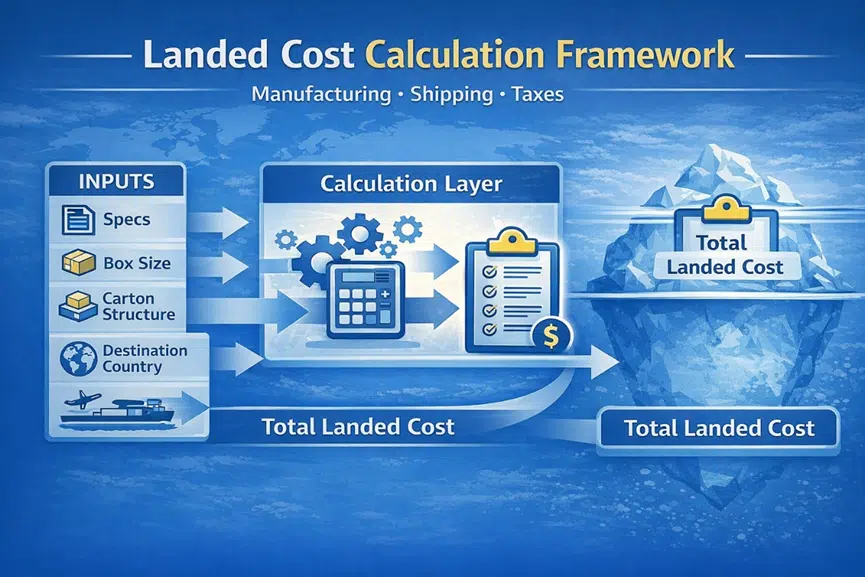
Before contacting a manufacturer, several pieces of information should be clarified first. These are the minimum inputs that help the supplier understand what is actually being quoted.

Estimated order quantity
The first item that should be fixed is the likely production quantity.
This does not need to be the final purchase quantity, but it should be realistic. If the project is still being evaluated, it is usually better to provide two likely scenarios, such as 500 units and 1,000 units, rather than a placeholder number.
Quantity helps the supplier interpret the commercial nature of the request. A very low exploratory quantity may suggest prototype logic. A more stable production number suggests a retail or launch-oriented quotation.
Core component list
The supplier should be able to understand the structure of the game at a glance.
This means the request should include the main components and approximate counts per set, such as card decks and card count, game board or boards, tokens, rulebook or folded instruction sheet, dice, wooden pieces, plastic parts, bags, trays, or other packed items.
A request that says “a board game with cards, tokens, and box” is usually too broad. A request that identifies the core components and approximate quantities is much more useful, even if some details are still provisional.
Basic production format
A quote request should also define the likely production format of the major components.
This includes points such as standard card size or custom card size, folded board or no board, booklet or folded leaflet, and the likely packaging direction, such as tuck box, lid-and-base rigid box, or another boxed format.
These are not minor details. They determine how the project will be interpreted operationally. If the format is left undefined, the supplier may choose a default assumption that does not match the product you actually want.
Packaging direction
Many first-time inquiries focus heavily on the game components but say very little about packaging.
Even if the final packaging design is not yet decided, the request should state the likely box direction and whether any insert structure is expected. This may include a simple tuck box, a rigid setup box, a basic insert, a plastic tray, multi-compartment storage, or a presentation-led retail package.
A manufacturer does not need the final box dieline at the first quotation stage. But they do need to know whether the project is intended as a basic card product, a compact boxed game, or a more structured retail package.
Delivery destination
The destination should also be stated early.
At minimum, the supplier should know the destination country. If possible, the request should also indicate the likely delivery type, such as port delivery, warehouse delivery, fulfillment center delivery, or business address delivery.
This helps the supplier understand the commercial context of the quote and whether the request is limited to manufacturing review or includes delivery expectations as well.
What Can Still Be Approximate at the Quotation Stage
Preparing a quote request does not mean everything must be finalized before the conversation begins.
This is especially important for creators who are still refining the game. Some parts of the project should be fixed before requesting a quote, but others can remain provisional as long as they are identified honestly.
Final artwork is usually not required for an initial quotation. If the card size, box type, and component counts are already defined, the artwork itself can still be in progress.
Decorative finishes do not always need to be confirmed in the first request. Optional features such as foil, spot treatments, linen texture, or other special finishes can be discussed later.
For some accessory categories, it is acceptable to begin with reference-level assumptions. Standard-style dice, common wooden pawns, or simple drawstring bags do not need final specifications at the first quotation stage. This only works when the accessory type itself is clear.
In some projects, the exact box depth may also remain provisional. This can still be acceptable if the component structure is already clear enough to support a working packaging assumption.
The principle is simple: not every detail needs to be final, but the unknowns should be visible.
How to Organize Your Quote Request So Manufacturers Can Respond Clearly
A well-prepared quote request does not need to be long. It needs to be structured.
A practical quote request can usually be organized in the following order:
Real-World “What Happens If You Don’t Specify” Examples
Quantity only, no material info:
If you only tell the manufacturer “I want 500 card decks” without specifying card weight or paper type, the resulting quotation may vary widely depending on default material assumptions. The number becomes almost unusable for comparison.
Incomplete component list:
If you list “board and tokens” but omit dice or custom inserts, one supplier may include standard dice while another assumes none. The quotes then reflect different project scopes rather than real pricing differences.
💡 Pro Tip
A helpful rule is this: if the manufacturer can understand your project without inventing major missing details, the request is probably ready to quote.
What Missing Details Usually Distort a Quote
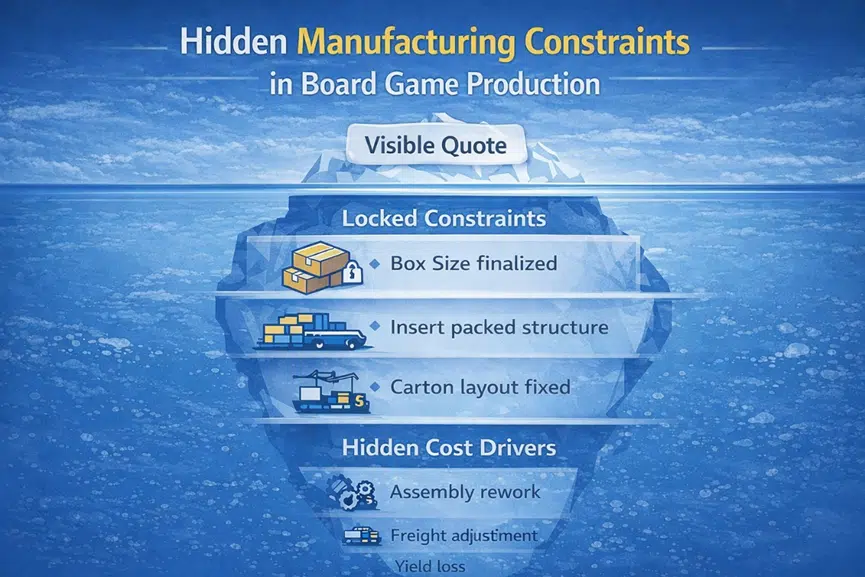
Most quotation problems do not come from pricing itself. They come from missing scope.

Common missing details include:
Even if suppliers respond in good faith, these gaps make quotations harder to compare and less useful.
A Pre-Quote Checklist for Creators, Publishers, and Kickstarter Teams
If most items are checked, the inquiry is likely ready. Otherwise, clarify the product structure before requesting further quotations.
Conclusion
A Better Quote Starts With a Better Request
Many quote problems begin before pricing starts—when the product category is unclear, component structure incomplete, packaging assumptions missing, or delivery context unspecified. Suppliers may respond, but the quotations are often less comparable and harder to use.
A better quote starts with a better request.
Not every detail must be finalized. The project should be organized so the manufacturer can understand what is confirmed, what is provisional, and where the main open variables remain. For creators, publishers, and Kickstarter teams, this preparation step often determines whether a quotation is truly useful.

Author: August Hu
Project Manager at FUNWAY • 19 years in game printing & manufacturing