Why Custom Board Game Manufacturing Costs More Than You Expect
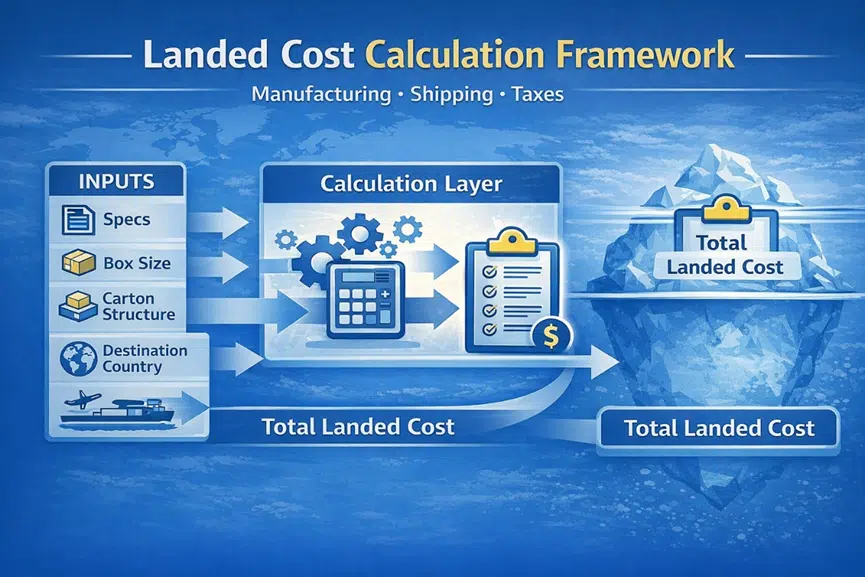
📝 This article is part of the Custom Board Game Pricing System:
What You Don’t See in the Initial Quote
Initial quotes are not wrong.
They are incomplete.
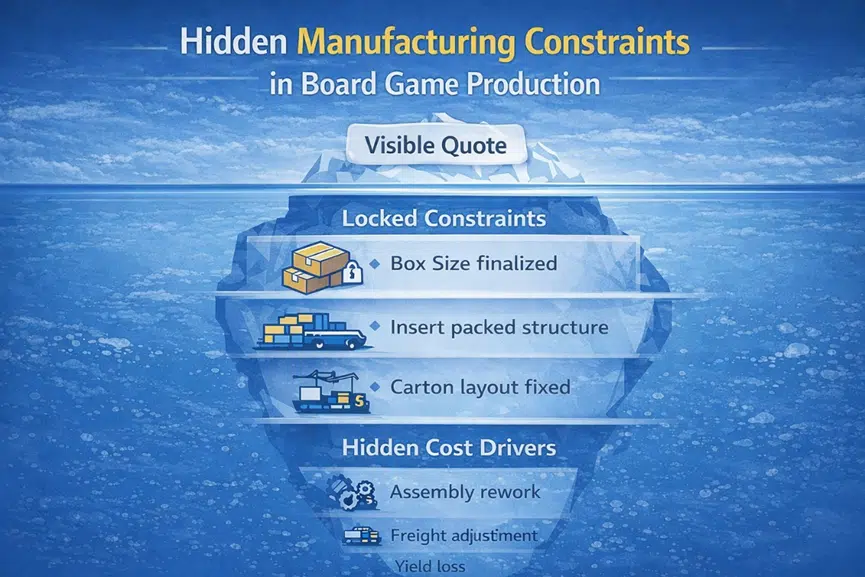
In custom board game manufacturing, cost escalation rarely comes from supplier behavior. It comes from manufacturing constraints that are not visible—or not locked—at the time of quoting.
This article explains why custom board game projects often cost more than expected, focusing on the process realities and design-stage decisions that determine final cost outcomes.
The Cost You See vs. the Cost You Don’t

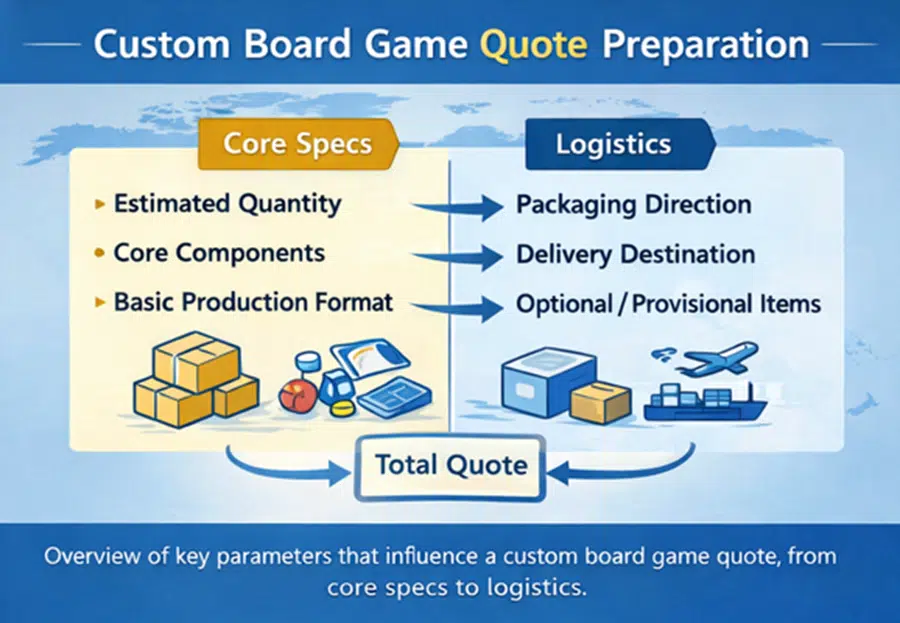
A typical initial quote reflects what can be clearly specified at that moment:
What it often excludes are costs driven by uncertainty:
These costs do not appear as line items early on.
They emerge later, once decisions become binding.
Tooling, Setup, and MOQ Reality
Manufacturing setup costs are not linear.
Key realities include:
As a result, moving from 100 to 300 units does not reduce cost proportionally.
Many setup-related costs amortize only after practical volume thresholds are reached.
This is why small runs often appear disproportionately expensive—
not because pricing is inflated, but because setup effort is fixed.
Quality Control, Rework, and Yield Loss
Board games are multi-component products.
Consistency is harder than it appears.
Hidden cost drivers include:
Quality control is not optional.
Rework, inspection, and yield loss are part of maintaining playable, sellable products.
These costs increase with:
They are rarely visible in early quotes, but they directly affect final cost stability.
Assembly, Packing, and Box Constraints

Box size is a critical path decision.
Once box dimensions are set:
Late-stage changes to box size or insert structure often trigger cascading effects:
This is why packaging decisions disproportionately affect total cost, even when unit material changes seem minor.
Cheap Quotes That Become Expensive
Cost overruns are rarely caused by “low-quality factories.”
They are more often the result of process gaps.
Common patterns include:
In these cases, the quote was not incorrect—it was based on assumptions that later changed.
When assumptions shift after production planning begins, cost follows.
What Stable Pricing Actually Requires
Stable pricing is not achieved by negotiating harder.
It is achieved by reducing unknowns.
This requires:
When these inputs are controlled early, pricing becomes predictable—even for complex custom projects.
See what information manufacturers need before quoting:
How This Article Fits the Pricing System
This article explains why costs increase.
For a system-level overview of where costs originate, see:
For step-by-step calculation methods and landed cost scenarios, see:
Together, these articles form a complete pricing framework—from structure, to calculation, to explanation.
Conclusion
Custom board game manufacturing cost is driven by constraints, not surprises.
Projects that stay within budget do not avoid complexity.
They manage it early, when decisions are still reversible.
A stable quote starts with a stable manufacturing plan.

Author: August Hu
Project Manager at FUNWAY • 19 years in game printing & manufacturing