Why Custom Plastic Miniatures Increase Board Game Manufacturing Cost and Lead Time
Custom plastic miniatures do not mainly raise cost because of plastic. They raise cost because they change the manufacturing path. Once tooling, molding, cavity fit, and review cycles enter the project, the budget and timeline stop behaving like a flat-print board game.
If you are planning a custom game and wondering why miniatures change the quotation so quickly, the short answer is this: they do not behave like printed components.
That sounds obvious, but many first-time buyers still compare miniatures to cards, boards, punchboard, or rulebooks as if they are just another component line. They are not. In board game manufacturing, custom plastic miniatures usually change the project earlier than buyers expect, because they introduce tooling, molding, fit risk, and another approval path before the mass production run is even stable.
So the real question is not just, “How much do miniatures cost?”
The better question is:
What do miniatures change in the manufacturing model before production even starts?
That is where the real answer sits.

Miniatures Do Not Raise Cost in the Same Way Printed Components Do
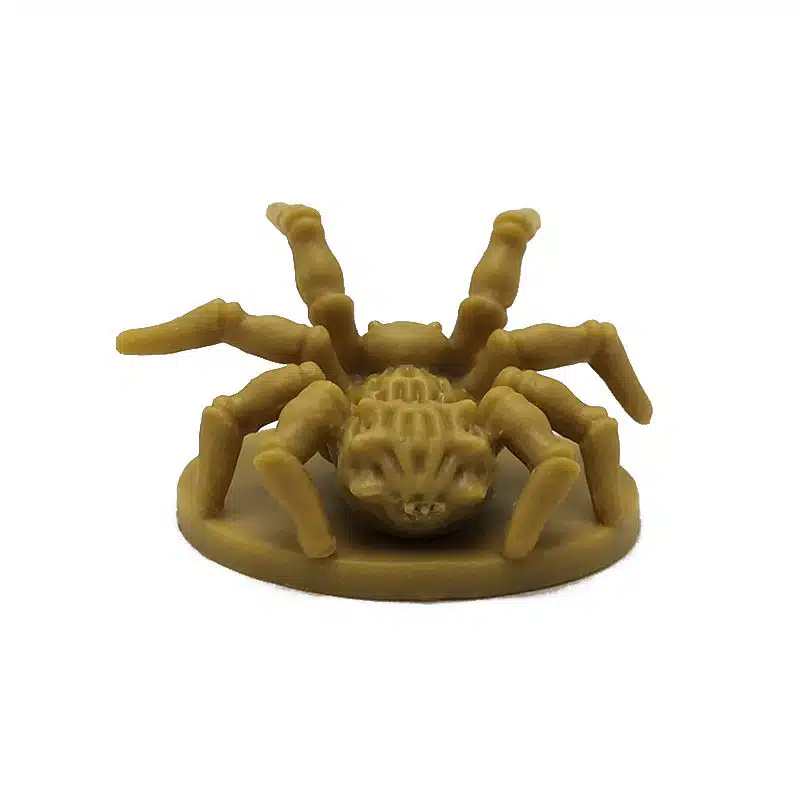
Custom Game Miniature
A printed game component usually enters the cost model through material, printing, converting, and assembly. The structure is already relatively familiar. Once the files and specs are stable, the cost mostly scales through production quantity.
Miniatures are different.
A custom plastic miniature has to become manufacturable before the unit price really matters. That means the cost does not begin with plastic weight. It begins with the production structure needed to reproduce the shape consistently.
This is why buyers often underestimate the first quotation shock. They expect the miniature cost to behave like “one more component.” Instead, the miniature decision pushes the project into a different cost path.
The most common misunderstanding is focusing on the material. Yes, material matters. But it is rarely the first reason the price jumps. The bigger reason is that the miniature requires a manufacturing basis — tooling, mold development, trial output, and sometimes adjustment — before the part is ready for repeat production.
That is why a project can still look affordable as a paper-based game and then change sharply once custom miniatures are added. The buyer did not merely add a component. The buyer changed the production path.
Tooling Is Usually the Real Cost Shift, Not the Plastic Itself
This is the point that should be said more clearly than it usually is.
When buyers see a tooling charge or mold fee, they sometimes read it as an extra fee attached by the factory. In reality, it is usually the point where the miniature becomes real enough to manufacture repeatedly.
The structure has to be translated into a production tool. Without that step, the shape is still only a design idea.
So when people ask why custom plastic miniatures increase board game manufacturing cost, the first honest answer is: because tooling is an upfront commitment, and that commitment exists before volume efficiency starts helping you.
That is why the miniature decision hits smaller runs much harder.
A printed component can often scale more gently. A molded part usually does not. The upfront cost lands early, before the quantity has done much to absorb it.
And this is where project-stage judgment matters.
If the project is still in early market testing, tooling-heavy miniatures are often the wrong decision even if they make the prototype look stronger. That is not because miniatures are bad. It is because the budget model is now carrying a commitment that the project stage may not deserve yet.
On the other hand, if the miniature is central to gameplay clarity, collector value, brand identity, or the commercial positioning of the game, then trying to avoid tooling at all costs can also be the wrong move. In that case, the miniature is not decoration. It is part of the product logic.
So the decision should not be “miniatures are expensive.”
That is too shallow.
The better decision question is:
Is this miniature important enough to justify changing the manufacturing path?
That is the real threshold.

Cost Control Usually Fails Before Unit Price Becomes the Main Problem
This is one of the most consistent mistakes in miniature-heavy projects.
The team gets excited about the sculpts early. Then, once the tooling cost appears, they start trying to “save money” somewhere else — thinner boxes, weaker inserts, downgraded print finishes, compressed packing, or fewer sample loops. That usually creates the wrong kind of savings.
Cost control usually fails at step 2 here, not step 5.
The problem was not that the unit price became slightly higher later. The problem was that the miniature decision was made before the project had fully tested whether the mold commitment belonged in the budget at all.
The more workable sequence is:
That order matters because designers often optimize visual impact before budget lock-in. From a manufacturing perspective, that is backwards.
A strong-looking prototype can still be a weak production decision.
And buyers who miss this usually do not feel the damage in the miniature line alone. They feel it later when they start cutting parts of the product that should have stayed stable.
Miniatures Also Change Lead Time — Not Just Budget
When custom miniatures are added, many buyers focus only on price. That is incomplete.
Miniatures also change the timeline because tooling has its own clock. It introduces development, review, trial output, possible revision, and fit confirmation. A game with molded parts should not be planned like a game made only from printed components.
This matters because some schedule promises sound reasonable only if the game is still behaving like a flat-print project. Once miniatures enter, that assumption weakens.
A common planning error is mentally compressing tooling work into general “sample time.” That is too rough to be useful. Tooling is not just another sample stage. It is its own commitment path, and if the part needs adjustment, the project pays in time before the full run is truly stable.
Another quiet timeline issue is that miniatures often affect other decisions indirectly. The moment molded parts enter the set, insert logic becomes more sensitive, cavity design matters more, packed height can shift, and the physical MPC becomes more valuable. So the miniature does not just add one lead-time block. It can make other review steps more necessary too.
This is why a project with custom miniatures should be treated as a different timeline class, not just the same product plus extra pieces.
The Miniature Decision Is Usually Misjudged in One of Two Ways
There are two common errors, and both are expensive.
The first is adding miniatures too early because they improve presentation value. This usually happens at prototype stage, when the team is still proving the game concept but starts committing to the most tooling-sensitive part of the product. If the commercial direction is not stable yet, that is often premature.
The second is delaying the miniature decision too long, as if it can be slotted in later without changing the schedule much. That is also a mistake. Once the product structure, insert logic, and proofing path have been built around a paper-only assumption, late miniature integration can force rework in several places.
So the miniature decision should not be made only from visual enthusiasm, and it should not be postponed until the production window is already supposed to be firm.
The better sequence is:
That is stronger than designing the rest of the game first and asking later whether miniatures can “still fit.”
They may fit. That does not mean they fit well into the cost model.
Why Small Projects Feel the Mold Cost More Sharply
This point often gets discussed too vaguely, so it is worth making it clearer.
Miniatures are not automatically a bad idea for lower-volume games. But lower-volume projects usually feel the mold cost more sharply because the upfront tooling commitment is being spread across fewer units. That is the basic reason.
The mistake is thinking the problem is only arithmetic. It is not.
The sharper issue is that on smaller projects, the mold cost does not just make the miniature expensive. It changes the entire budget conversation. Once the tooling charge becomes prominent enough, the buyer starts evaluating the whole set differently. Box quality, insert design, printed upgrades, and sample strategy all start competing against the miniature decision.
This is where stage mismatch becomes dangerous.
If the product is already commercially well-positioned and the miniature is central to the value proposition, that may still be acceptable. But if the game is still testing demand, the miniature can become the single feature that distorts the rest of the product.
That is why lower-volume projects need more discipline, not less, before committing to custom molded parts.
Miniatures Affect More Than the Miniature Line Itself
Another thing buyers do not always see early enough is that miniatures rarely stay isolated.
Once molded pieces enter the set, several other parts of the project may start moving:
This does not mean miniatures should be avoided. It means they should be treated as a product-level decision, not a decorative upgrade.
That distinction is important.
A miniature is not just “one more part in the box.”
In many cases, it changes how the box has to behave.
That is exactly why projects with miniatures should be quoted, sampled, and scheduled with different judgment from projects that are mostly flat print.
A Better Decision Sequence Before You Commit to Custom Miniatures
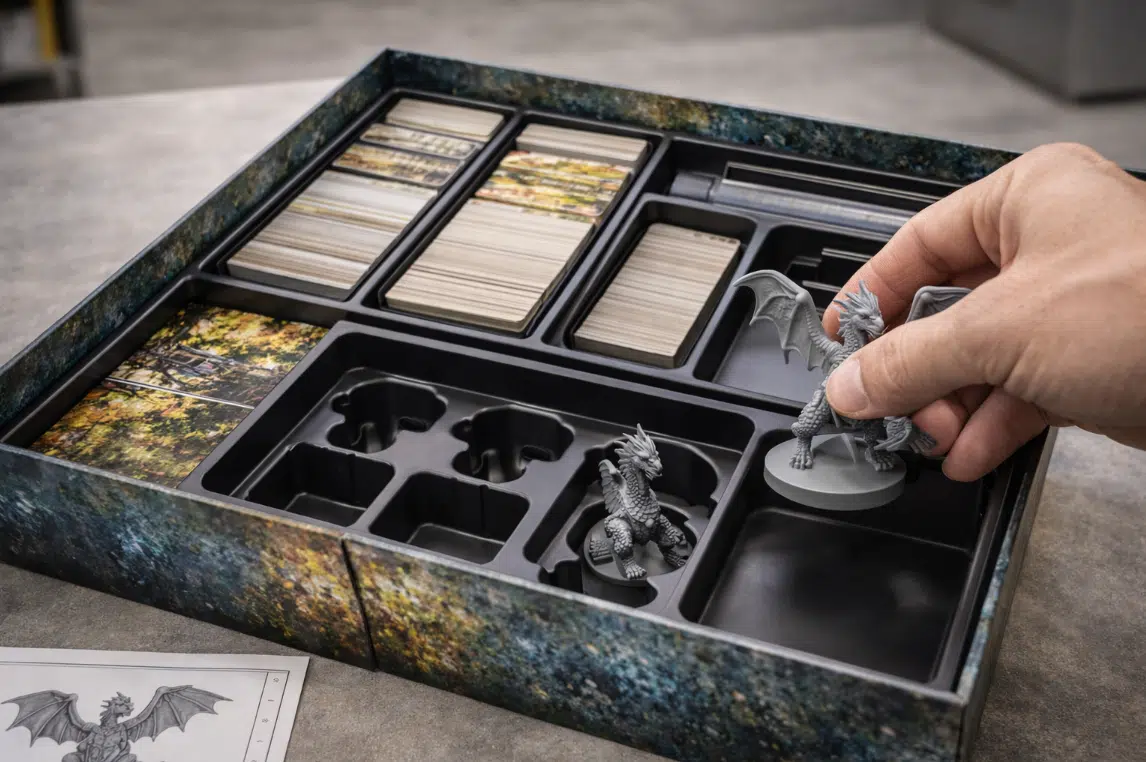
When Miniatures Are the Right Decision
So far this article has focused on why miniatures add cost and time. That is necessary. But it should not be misread as a blanket warning against them.
Miniatures are often the right decision when they are central to gameplay readability, collector appeal, retail positioning, or the game’s commercial identity. In those cases, trying to avoid them simply to simplify the quotation can produce the wrong product.
The problem is not the miniature itself. The problem is using miniatures without the volume, budget logic, or project maturity to support them.
That is why the key question is not “Are miniatures worth it?”
That is too broad.
The better question is:
Are miniatures valuable enough in this specific game to justify the tooling path, the longer lead-time class, and the extra structure they impose on the rest of the product?
If the answer is yes, they may absolutely be worth it.
If the answer is uncertain, that uncertainty should be taken seriously before the project locks in too much around them.
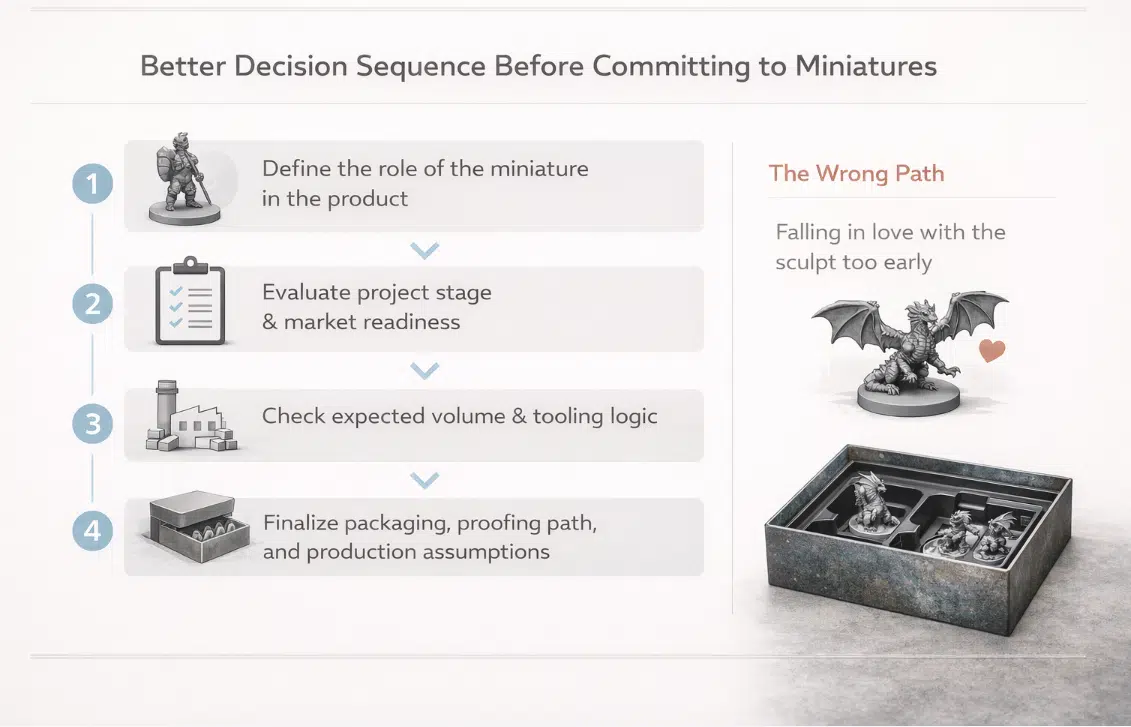
A Better Decision Sequence Before You Commit to Custom Miniatures
A more useful decision path usually looks like this:
That order is not elegant. But it is safer.
A lot of budget damage happens because the project falls in love with the sculpt before it has earned the mold commitment.
Warning Before You Add Miniatures to a Still-Unstable Project
⚠️ Warning: If your game is still changing core components, still testing its market position, or still moving card counts and insert assumptions, custom miniatures may be the wrong commitment at this stage.
If your expected volume is still weak, the mold cost will not just make the miniatures more expensive. It may start distorting the rest of the product budget.
And if your team is adding miniatures mainly because they made the prototype feel more impressive, but not because they are central to gameplay or product identity, that is usually a bad reason to let them drive the manufacturing model.
Custom plastic miniatures can absolutely strengthen a board game. But once they enter, the project stops behaving like a simple print job. If the product is not ready for that shift, the miniature is not the upgrade. It is the instability.
Next Steps for Your Project

Author: August Hu
Project Manager at FUNWAY • 19 years in game printing & manufacturing